Technology
Future of AI is a governance question, not a technology race: Vilas Dhar of Patrick J McGovern Foundation | Interview – Crypto News

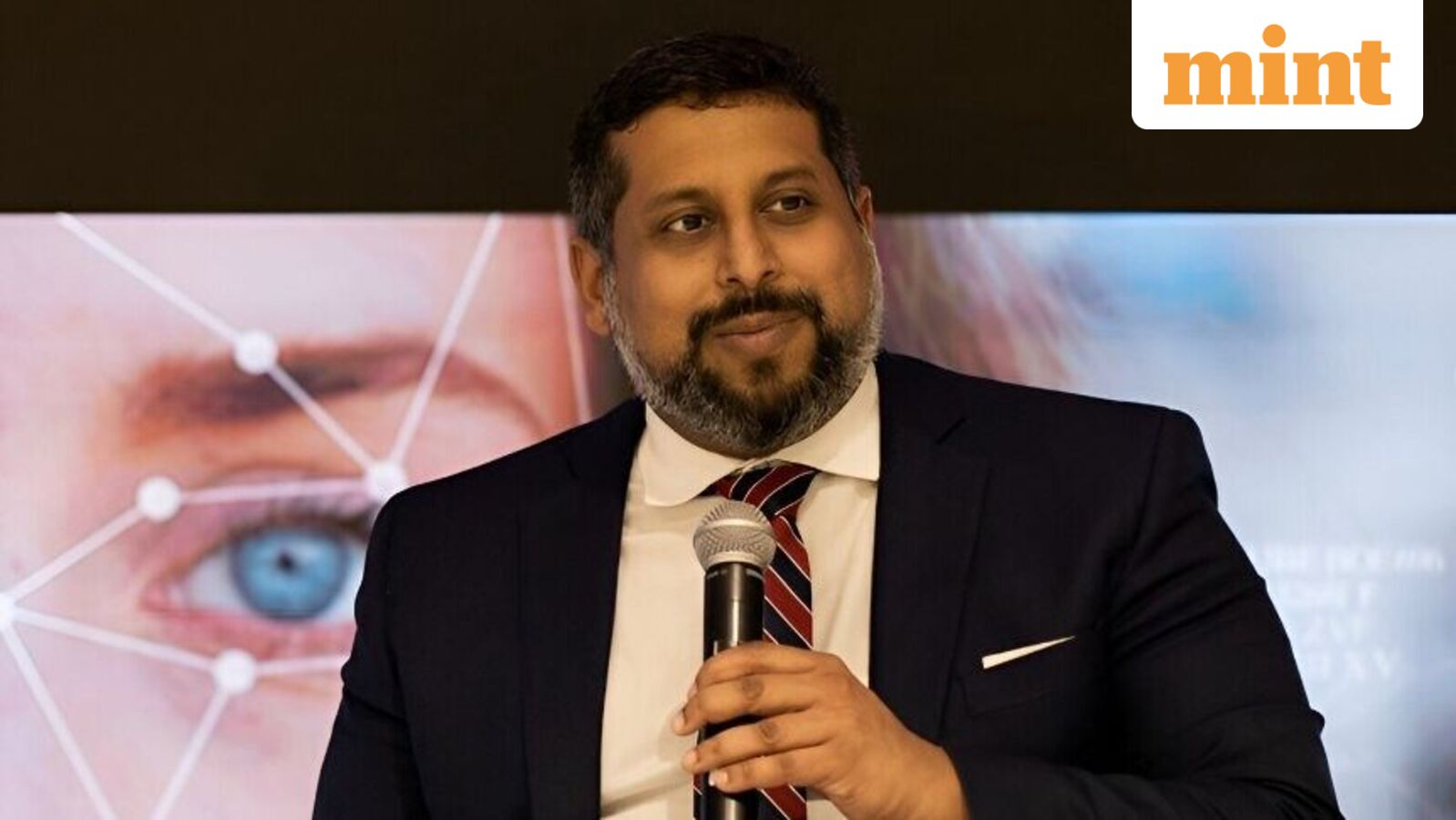
Vilas Dhar has been among the earliest voices to argue that Artificial Intelligence (AI) must be governed as long-term civic infrastructure rather than short-term commercial technology. Under his leadership, the $1.5 billion Patrick J McGovern Foundation, headquartered in Boston, Massachusetts, has deployed over $500 million specifically toward AI as public infrastructure, working closely with governments, multilaterals, and public institutions across the globe.
Dhar will be part of three panels at the India AI Impact Summit, to be held in India next week. In an interview with Mint, Dhar spoke about AI governance, philanthropy’s evolving role, India’s unique opportunity to build public AI infrastructure, and why the future of AI will ultimately be shaped by human choices — not algorithms. Edited excerpts:
Q: Tell us about the Patrick J McGovern Foundation — its mission and achievements.
A: Patrick J McGovern Foundation, a billion-and-a-half-dollar philanthropy, was born from scratch. We are, I think, the world’s largest investor in AI for good or AI for public purpose. We work very closely with civil society, non-profits, and we build our own AI products for public use.
We are one of the primary advisors to the multilateral system and to governments around the world on AI policy and AI governance.
Q: What is the role that AI is playing in governance?
A: Having spent 25 years as a computer scientist and building AI, I deeply believe this is the largest transformation humanity has ever experienced. What does it mean? It means that we’re changing not because of technology, but because we’re challenging some assumptions about what’s possible.
We’re opening up a future where an entirely new world is possible, in education, in agriculture, in medicine, but also in a new form of participation in democracy. AI creates entirely new opportunities.
The idea that tech companies will build and somehow, we will all benefit doesn’t work unless we build a new architecture for taking these tools and shaping them for human benefit. We have technology companies that innovate in incredible ways. We have governments around the world that regulate. But what we actually need to do is build a new layer of AI translation for public purposes.
How do we invest in the organisations, the tools, the applications, the layers of compute and data, plus also the ideas and vision for what’s possible that doesn’t just live for profit, but lives for purpose? This, I think, is the opportunity that we have in front of us.
Q: Is AI just another powerful tool — or something that changes human behaviour itself?
A: The entire world has been built around the idea of scarcity. There’s not enough to go around, and we built all these tools to do two things. One is to make a little more for all of us, and the other is to distribute it equally. I think the India story is really important because it’s actually the alternative case, and we can talk about that more if you’re interested.
Q: But at the same time, there’s also a fear that we might lose jobs because of AI. There are some critics who are very vocal about it.
A: Too often, we ask whether AI will displace humanity, instead of a more fundamental question: do we want AI to double productivity with the same number of people, or deliver the same output with half the workforce? That choice is human, not technological.
One path prioritises automation and job displacement—a bleak future. The other uses AI to augment human capability, strengthen what makes us human, and build institutions that do more without cutting people out.
Both futures are possible. The real question is who decides. Left to markets focused on short-term profit, displacement will dominate. What we need instead is long-term thinking—by policymakers, technologists, and civil society—to design a future that values people, not just profits.’
Q: How is AI playing out in philanthropy?
A: Philanthropy has, over the years, shifted its approach. Instead of leading with financing, we invested in technical expertise, public awareness, and building an ecosystem to apply AI to problems like malnutrition, education, and healthcare.
Today, the question is no longer how to start with AI, but how to reshape its public narrative. Philanthropy’s role is to think 30 years ahead — enabling long-term vision, risk awareness, public data access, talent development, and the design of AI as civic infrastructure.
Q: What are the challenges that the philanthropy sector has in India?
A: India operates from a different technical base. Access to advanced chips and large-scale compute remains limited, so efforts are underway — including philanthropic support and partnerships with institutions like Amrita University — to build local compute infrastructure.
On data, however, India has an advantage: its scale and government-led data initiatives create a strong foundation.
Talent is the critical challenge. Much global AI talent has been absorbed by the private sector. India must train AI scientists committed to public purpose and build policy incentives that support AI for societal benefit. Initiatives like India AI 2.0, offering grants and equity financing, are important steps.
The bigger opportunity is to create a public AI stack, empower entrepreneurs at scale, and shape a governance model rooted in public investment, ownership, and multilateral engagement — offering an alternative vision for the world.
Q: We have IITs in India, which are huge and where you mentioned foundations are working. On the other hand, we have these private universities coming up, like Ashoka. In Ahmedabad, there is Azim Premji University. We also have these people working on AI. So how do you balance this diversity?
A: I was in India recently and discussed this issue at length with Prof. Ajay Kumar Sood, the Prime Minister’s Principal Science Advisor. Beyond the IITs, I visited MICA in Ahmedabad and PSG in the South, where I saw extraordinary talent and imagination in institutions not traditionally seen as AI leaders.
This reinforced the need to broaden India’s AI ecosystem. Graduates from places like PSG or MICA should have the same access to funding, research support, and opportunity as IIT graduates.
To make that happen, funding flows must expand — ensuring entrepreneurs from these institutions can access venture capital, government grants, public datasets, and support to build both commercial and public-purpose AI solutions.
Q: We just had an announcement of the India–US bilateral agreement notice. What about the cooperation between India and the US on AI in terms of regulation, in terms of infrastructure, in terms of data?
A: I think it’s incredibly important that we establish the new economic cooperation framework. But it must be paired with a technology and governance-sharing framework. This includes obvious priorities like access to chips and domestic compute capacity.
More importantly, the flow should go both ways — not just chips from the US to India, but data, innovation, and AI models from India to the US. Indian solutions built for complex, large-scale challenges — such as supply chains — could spark new innovation in America.
To make this work, we need mechanisms to share intellectual property and AI expertise across borders. This deal could help enable that exchange.
Q: What are the key things India can learn from the US, and vice versa?
A: Look, from the US to India is very straightforward because we HAVE been doing it for so long, right?
What matters now is deeper collaboration — not just in research, but at the commercial level — as AI models evolve rapidly. We know what they can do today, but we must prepare for what they’ll achieve in five years.
At the same time, India’s experience in building digital public infrastructure and an AI translation stack at scale offers lessons for the US.
Finally, India’s complex, data-intensive use cases — possible only in ecosystems of such scale — can produce solutions that significantly strengthen systems in the US and the broader global north.
Q: Can you differentiate how AI can bring change in India, as it has in other countries, say the US?
The real question is who decides. Left to markets focused on short-term profit, displacement will dominate.
A: There is actually a very unique thing about India. In the US and the West, the focus is on building AI tools that people can see and hold, and know about, like ChatGPT, the AI tools on your phone, and the AI tools in your business.
In India, it’s going to be different. AI has to be an invisible infrastructure. It has to restructure systems. But for the person, it doesn’t matter if it’s being run by AI or not by AI. It actually has to work. And this is the incredible possibility in India: you can start at the system level, not the individual level, and if you get it right,it works for people.
Key Takeaways
- AI governance must prioritize long-term societal benefits over short-term profits.
- India has a unique opportunity to utilize AI as an invisible infrastructure that enhances existing systems.
- Philanthropy’s role is shifting towards building ecosystems and narratives that support AI for public good.