

Metaverse
Alibaba’s Eddie Wu dismisses Google CEO Sundar Pichai’s AI bubble concerns, vows aggressive investment – Crypto News

Alibaba Chief Executive Eddie Wu has forcefully dismissed market fears regarding an artificial intelligence (AI) bubble. Wu stated that the company “doesn’t really see much of an issue in terms of a so-called AI bubble” and plans to invest aggressively in the sector, despite recent warnings from Google CEO Sundar Pichai about “elements of irrationality” in the booming market.
Wu informed investors that Alibaba is currently struggling to keep pace with surging customer demand and predicted that AI resources would remain in short supply for at least the next three years. This confident outlook appears to be underpinned by tangible results: the company’s Qwen application, for instance, exceeded 10 million downloads within a week of its launch.
“We’re not even able to keep pace with the growth in customer demand,” Wu said, arguing that adoption is driven by real business needs across manufacturing and product development rather than speculation.
Sundar Pichai’s warning on AI bubble
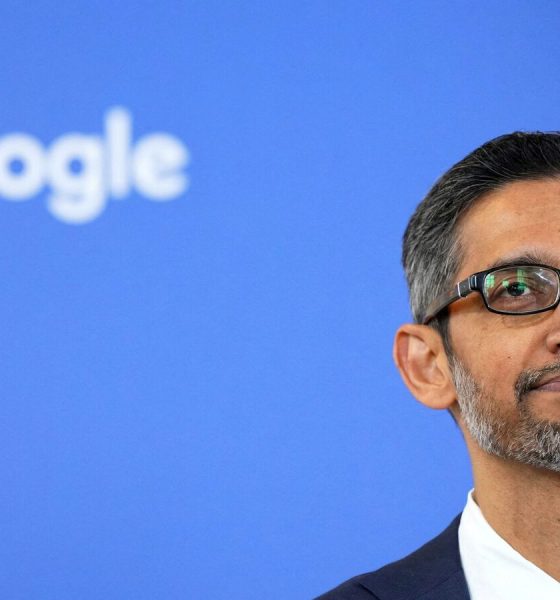
In stark contrast, Google CEO Sundar Pichai cautioned that if an AI bubble were to burst, no organisation would be immune, including Google itself. Drawing parallels with the dot-com era, Pichai acknowledged that investment cycles often “overshoot” and predicted that the AI sector would follow a similar pattern.
The Google chief’s core concerns revolve around whether the enormous capital expenditure on infrastructure can deliver sufficient returns quickly enough to justify the current high market valuations.
He specifically highlighted AI’s “immense” energy requirements, which accounted for 1.5% of global electricity consumption last year, and conceded that the company faces challenges in meeting its 2030 net-zero climate targets.
This divergence between optimists like Wu and sceptics like Pichai reflects a broader uncertainty across Silicon Valley. Big Tech firms are expected to spend $320 billion on AI infrastructure this year alone, all whilst grappling with crucial questions about when, and indeed if, these substantial investments will ultimately pay off.
Alibaba recently posted $34.8 billion in revenue for its September quarter, marking a 5% year-on-year increase. However, net income plummeted by 53% due to heavy spending on both AI development and commerce initiatives. The company’s cloud division spearheaded growth with a 34% increase, primarily driven by its AI-related products. Given this demand, Wu suggested that the company’s previously announced 380 billion yuan AI investment over three years “might be on the small side.”
Intriguingly, Wu’s bullish stance stands in notable contradiction to that of Alibaba Chairman Joe Tsai, who had earlier warned in March about seeing “the beginning of some kind of bubble” in the rapid rush to build data centres.










-
Technology5 days ago
Crypto Lawyer Bill Morgan Praises Ripple’s Multi-Chain Strategy as RLUSD Hits $1.1B – Crypto News
-

 Cryptocurrency5 days ago
Illuminating progress: Is a $140K income ‘poor’? – Crypto News
-

 others5 days ago
Gold holds strong at $4,200 as Fed-cut anticipation builds – Crypto News
-

 Blockchain4 days ago
Analyst Reveals What You Should Look Out For – Crypto News
-
others1 week ago
Why Is Crypto Market Recovering? – Crypto News
-
Technology1 week ago
Breaking: First U.S. Chainlink ETF Goes Live as Grayscale Launches ‘GLNK’ – Crypto News
-
Cryptocurrency1 week ago
Crypto Platform Polymarket Relaunches in U.S. Following CFTC Approval – Crypto News
-
others1 week ago
$12T Charles Schwab to Launch Bitcoin and Ethereum Trading in Early 2026, CEO Confirms – Crypto News
-

 Cryptocurrency1 week ago
‘Get it done on time’ – Lawmakers push regulators on GENIUS Act rollout – Crypto News
-
Business1 week ago
Crypto Platform Polymarket Relaunches in U.S. Following CFTC Approval – Crypto News
-

 Cryptocurrency1 week ago
UK recognises crypto as property in major digital asset shift – Crypto News
-

 Technology6 days ago
Samsung Galaxy S25 Ultra 5G for under ₹80,000 on Flipkart? Here’s how the deal works – Crypto News
-

 Cryptocurrency5 days ago
Florida Appeals Court Revives $80M Bitcoin Theft – Crypto News
-

 Cryptocurrency4 days ago
Argentina moves to reshape crypto rules as banks prepare for Bitcoin services – Crypto News
-
others1 week ago
Strategy CEO Says Bitcoin Sales Unlikely Before 2029 After Creating $1.44B Dividend Reserves – Crypto News
-
Business1 week ago
Sui Price Surges 10% As Vanguard Group Adds SUI to Bitwise 10 Crypto Index – Crypto News
-

 Cryptocurrency1 week ago
Ripple CTO Shares Hilarious Email from Jed McCaleb Impersonator – Crypto News
-
Business1 week ago
Senator Tim Scott Floats December 17 and 18 For Crypto Market Bill Markup – Crypto News
-

 Cryptocurrency1 week ago
BTC staking platform Babylon teams up with Aave for Bitcoin-backed DeFi insurance – Crypto News
-

 Blockchain1 week ago
Solana (SOL) Cools Off After Rally While Market Eyes a Resistance Break – Crypto News
-
others6 days ago
Bitcoin Price Forecast as BlackRock Sends $125M in BTC to Coinbase — Is a Crash Inevitable? – Crypto News
-

 Technology6 days ago
Working on a screen all day? These 8 LED monitors in Dec 2025 are kinder on your eyes – Crypto News
-

 others6 days ago
The rally to 7120 continues – Crypto News
-

 Cryptocurrency5 days ago
Crypto Holiday Gift Guide 2025 – Crypto News
-

 others5 days ago
Nasdaq futures hold key structure as price compresses toward major resistance zones – Crypto News
-
others5 days ago
Nasdaq futures hold key structure as price compresses toward major resistance zones – Crypto News
-
others4 days ago
Breaking: Labor Department Cancels October PPI Inflation Report Ahead of FOMC Meeting – Crypto News
-

 others1 week ago
EUR/GBP edges higher as Eurozone inflation supports Euro, BoE weighs – Crypto News
-

 Cryptocurrency1 week ago
SHIB Exec Calls FBI, RCMP and Interpol to Action on Surging Cyber Attacks – Crypto News
-

 Metaverse1 week ago
Is ChatGPT working again? OpenAI’s latest update as users report outages – Crypto News
-
Business1 week ago
Trump Sets Early 2026 Timeline for New Fed Chair Pick – Crypto News
-

 Cryptocurrency1 week ago
Vanguard reverses course, opens door to Bitcoin, Ethereum, XRP, and Solana ETFs – Crypto News
-
others1 week ago
XRP News: Ripple Expands Payments Service With RedotPay Integration – Crypto News
-

 Blockchain1 week ago
Ledger Finds Chip Flaw Allowing Complete Phone Takeover – Crypto News
-
Business1 week ago
Kalshi, Robinhood and Crypto com Face Cease & Desist Order in Connecticut – Crypto News
-

 Technology7 days ago
Cloudflare Resolved Services Issues Caused by Software Update – Crypto News
-

 Technology6 days ago
From security camera to gaming hub: 6 Easy tricks to make your old smartphone genuinely useful again – Crypto News
-
others5 days ago
Morgan Stanley Turns Bullish, Says Fed Will Cut Rates by 25bps This Month – Crypto News
-

 Blockchain5 days ago
Bitcoin Buries The Tulip Myth After 17 Years: Balchunas – Crypto News
-

 Cryptocurrency5 days ago
Why Ethereum strengthens despite whale selling – Inside Asia premium twist – Crypto News
-

 Technology4 days ago
Starlink India pricing revealed: How much does monthly plan cost and what are its benefits? – Crypto News
-

 Blockchain3 days ago
Stripe and Paradigm Open Tempo Blockchain Project to Public – Crypto News
-
Business1 week ago
Kraken to Acquire Backed Finance, Expanding Tokenized Equities Ahead of 2026 IPO – Crypto News
-
Business1 week ago
Litecoin Price Jumps 10% as Vanguard Opens LTCC Access — How High Can LTC Go? – Crypto News
-

 Technology1 week ago
Meet the Indian-origin AI founders dominating Forbes’ latest 30 Under 30 list – Crypto News
-
Cryptocurrency1 week ago
Hedera Price Surges 10% After Canary Capital HBAR ETF Goes Live on Vanguard – Crypto News
-

 Blockchain1 week ago
Leveraged ETFs Tied To Strategy Suffer Major Losses – Crypto News
-

 Metaverse1 week ago
Indian enterprises all-set to take an AI leap as partners guide adoption – Crypto News
-
Business1 week ago
December Fed Rate Cut Prospects Strengthen After ADP Shows Deepening Labor Market Weakness – Crypto News
-

 Blockchain1 week ago
Taiwan to Pass Stablecoin Regulations in Late 2026: Report – Crypto News