
Blockchain
Fake Police Raid Scam Forces Victim to Send $1M in Bitcoin – Crypto News

Key takeaways
-
Crypto security is expanding beyond digital threats, with criminals increasingly targeting individuals directly through physical coercion rather than trying to exploit blockchain vulnerabilities or hack wallets.
-
The French case illustrates how attackers used a fake police raid and violence to force a Bitcoin transfer worth $1 million, bypassing encryption entirely by compelling the victim to authorize the transaction.
-
Wrench attacks are rising, with criminals using threats or force instead of technical exploits. This highlights how human vulnerability can override even the most secure cryptographic systems.
-
Impersonating authority figures such as police is highly effective because it combines fear, urgency and social conditioning, making victims more likely to comply without questioning the situation.
Digital defenses are no longer the only front line in crypto security. While phishing and exchange hacks have long been major threats, a growing number of thefts now bypass code entirely and target crypto holders directly.
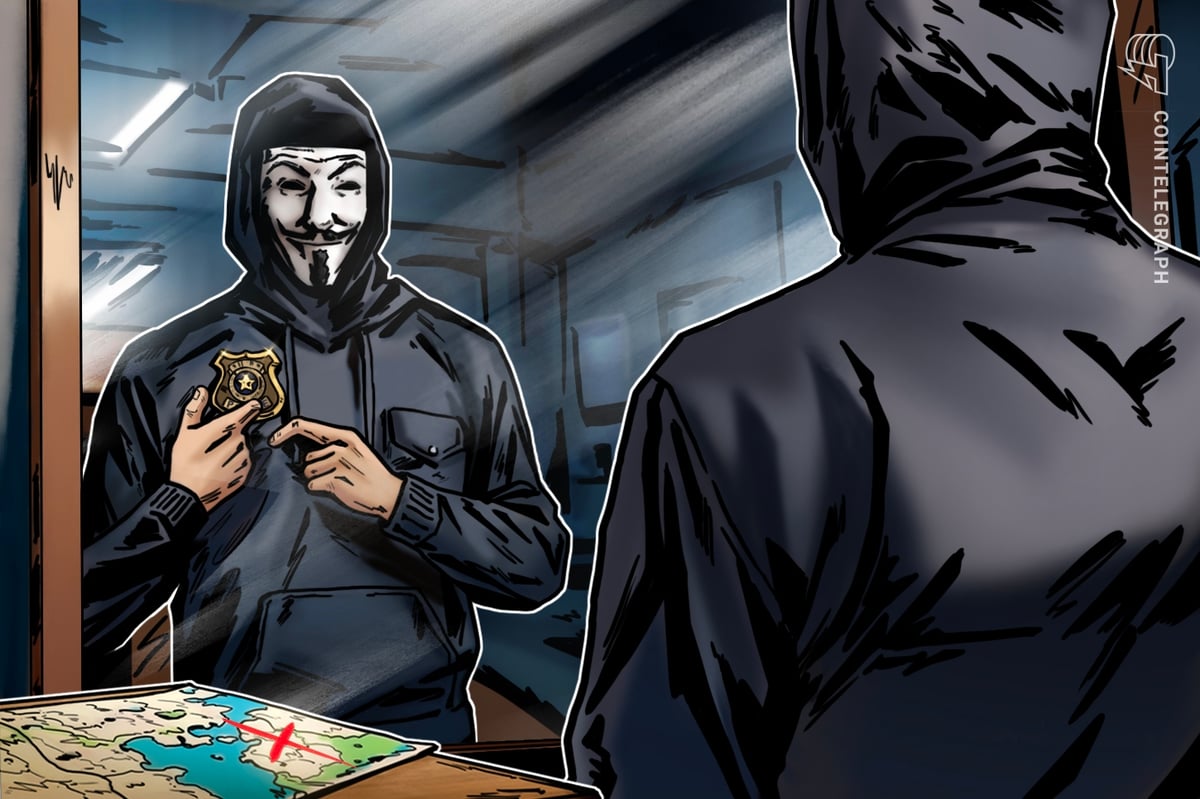
A recent case in France highlights this shift. Attackers posing as police staged a “raid” and physically coerced a couple into transferring nearly $1 million in Bitcoin (BTC). This was not a failure of software, but a high-stakes robbery carried out through physical force.
When the victim, not the wallet, becomes the target
The incident occurred in Le Chesnay-Rocquencourt, a town near Paris, where a couple in their late 50s was allegedly assaulted inside their residence.
Here is the chronology of the incident:
-
Three individuals disguised as police officers gained entry to the home.
-
The couple was threatened at knifepoint.
-
The husband was forced to send Bitcoin to the attackers.
-
Both victims sustained injuries, and the husband was physically restrained and tied up.
-
The assailants fled the scene in a vehicle.
French authorities are currently investigating the matter, with charges including armed robbery and organized criminal conspiracy.
What distinguishes this case is not only the use of violence, but the specific strategy employed.
Rather than attempting to crack encryption, the perpetrators bypassed it entirely by coercing the owner into authorizing the transfer.
Why impersonating police officers is so effective
Posing as law enforcement officials is often effective because it taps into several psychological triggers:
-
Authority: People are socially conditioned to obey police directives.
-
Urgency: The appearance of an official raid creates the impression that immediate compliance is necessary.
-
Fear: Any resistance can seem as though it may lead to criminal consequences.
When criminals present themselves as police, victims often fail to question:
-
The reason for their presence.
-
The legitimacy of their demands.
-
The authenticity of the entire situation.
Under stress, the impulse to obey tends to overpower the instinct to verify or question what is happening.
In crypto, this risk is even greater because a single approved transaction can move significant funds in seconds.
Did you know? The term “wrench attack” became popular in the crypto space after an online comic joked that threatening someone physically is easier than breaking encryption. It reflects a real-world shift in which attackers bypass complex systems by targeting people rather than technology.
From simulated police raid to coerced Bitcoin transfer
Unlike conventional robberies that target cash, jewelry or other tangible items, this assault specifically targeted digital cryptocurrency holdings.
The attackers’ objective was straightforward: force the victim to carry out an immediate crypto transfer.
This form of theft can be difficult to contain for several reasons:
-
Stolen funds can be transferred anywhere in the world within minutes.
-
Blockchain transactions are generally irreversible.
-
Once transferred, funds can be moved quickly, which can make tracing and recovery more difficult.
When the victim retains direct control over their wallet, criminals do not need to steal hardware or break through security. They only need to force the victim to approve and send the transaction personally.
Understanding wrench attacks in the cryptocurrency space
It is often far easier to threaten a person with a wrench than to try to crack their encryption.
Rather than attempting to hack a wallet, perpetrators may use:
-
Threats
-
Physical violence
-
Other forms of coercion
These methods are used to force victims to reveal private keys or authorize the transfer of funds. Such attacks bypass even the strongest technical protections.
No matter how strong the encryption is, human vulnerability can make that security irrelevant.
Did you know? Some high-net-worth crypto holders now use “decoy wallets” with small balances. In a coercive situation, they can reveal these wallets instead of their main holdings, adding an extra layer of psychological and financial protection.
Why these attacks are becoming more frequent
Several underlying factors are driving this increase:
-
Growth in self-custody: A rising number of users now hold their own private keys and manage their assets directly, making them more immediate and accessible targets.
-
Visibility of high-value targets: Many cryptocurrency investors, company founders and executives maintain public profiles that make their wealth and identity relatively easy to identify.
-
Advances in cybersecurity: As digital wallet security improves and remote hacking becomes more difficult, criminals are increasingly turning to the softer target, the human user.
-
Instant global liquidity: Cryptocurrency enables near-instant transfers of value anywhere in the world without banks or intermediaries acting as gatekeepers.
In 2025 alone, documented cases of verified wrench attacks reportedly rose sharply, increasing 75% from 2024. Europe, and France in particular, stood out as a growing hotspot for such incidents. Financial losses reached $40.9 million in 2025, marking a 44% annual increase. While kidnapping remained the primary threat vector, physical assaults surged by 250%.
Why France has experienced a surge
France has recently recorded multiple high-profile violent crimes linked to cryptocurrency:
-
Kidnappings carried out to extort cryptocurrency ransoms.
-
Home invasions specifically targeting high-profile figures in the crypto industry.
-
Coordinated operations by organized criminal groups aimed at stealing digital assets.
These recurring incidents point to a shift in criminal behavior:
-
More deliberate efforts to identify individuals who hold cryptocurrency.
-
Increased surveillance of their physical locations and daily routines.
-
A growing preference for direct physical targeting over purely digital methods.
As cryptocurrency adoption continues to expand, public awareness of who owns it is also growing. Unfortunately, the physical risks associated with that visibility are rising as well.
Why criminals increasingly choose coercion over hacking
Crypto security has become increasingly strong. Hardware wallets, multisignature setups and cold storage solutions make remote hacking far more difficult.
Coercion, however, changes the equation.
Even the strongest technical protections may fail if a victim is coerced into unlocking their hardware device, revealing their credentials or authorizing a transaction.
Coercive attacks bypass cryptographic defenses entirely, target points of human access and exploit natural human reactions.
For perpetrators, this approach is often faster and more reliable than trying to break through technical defenses.
Why Bitcoin remains particularly exposed in duress situations
Bitcoin’s core architecture gives it considerable strength, but it also creates significant vulnerability when the owner is under coercion.
Its key features include:
-
The ability to transfer value immediately
-
The absence of any central entity capable of reversing transactions
-
Permissionless, worldwide accessibility
In a situation where the holder is forced to transfer funds, these traits can result in:
-
Assets being moved almost instantly
-
Virtually no realistic chance of recovery
-
Attackers rapidly moving funds across multiple addresses
The same qualities that give Bitcoin its independence and value also make stolen funds extremely difficult to recover once they are transferred under duress.
Did you know? Private security firms have started offering specialized protection services for crypto investors, including travel risk assessments, home security audits and digital footprint reduction strategies aimed at preventing targeted attacks.
How French authorities are responding
French law enforcement agencies are actively investigating the incident, with specialized organized crime units leading the effort.
Potential criminal charges under review include:
Although authorities are increasing enforcement in response to such incidents, these cases continue to present serious challenges because of:
-
The rapid cross-border movement of stolen assets
-
The pseudonymous and irreversible nature of cryptocurrency transactions
-
The involvement of organized and professional criminal groups
Key security takeaways for cryptocurrency owners
This incident underscores a major shift in the nature of cryptocurrency security threats.
Protecting technical systems alone is no longer enough. Safeguarding wallets, private keys and physical devices must now be paired with strong personal security measures.
Essential protective steps include:
-
Never publicly reveal or discuss the extent of your cryptocurrency holdings.
-
Keep your real-world identity separate from your wallet addresses and ownership.
-
Use multisignature wallets so that no single individual or compromised key can authorize transfers.
-
Distribute signing authority and key control across different geographic locations or trusted parties.
Cointelegraph maintains full editorial independence. Guides are produced without influence from advertisers, partners or commercial relationships. Content published in Guides does not constitute financial, legal or investment advice. Readers should conduct their own research and consult qualified professionals where appropriate.