

others
Fed set to pause interest rate cuts as markets seek clues on next monetary policy moves – Crypto News

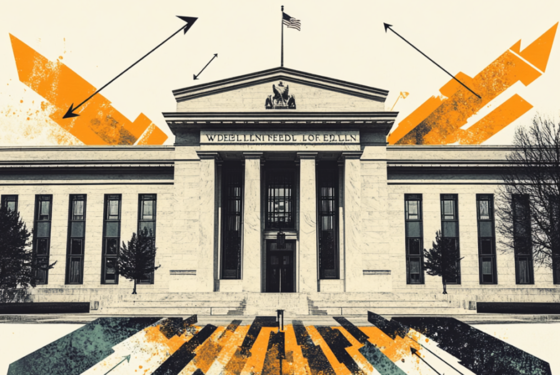
- The Federal Reserve is widely expected to leave monetary policy settings unchanged following the January meeting.
- Fed Chairman Powell’s presser could provide important clues about the rate outlook.
- The US Dollar could come under bearish pressure if the Fed leaves a rate cut in March on the table.
The United States (US) Federal Reserve (Fed) will announce monetary policy decisions following the first policy meeting of the year on Wednesday. Market participants widely anticipate that the US central bank will leave monetary policy settings unchanged after cutting the interest rate by 25 basis points (bps) to 4.25%-4.5% in December.
The CME FedWatch Tool shows that investors virtually see no chance of a rate cut in January, while pricing in a 33% probability of a 25 bps reduction in March. Hence, the statement language and comments from Fed Chairman Jerome Powell could drive the US Dollar’s (USD) valuation, rather than the interest rate announcement.
“The FOMC is widely expected to maintain its policy stance unchanged at 4.25%-4.50% next week, with Chair Powell expected to communicate what’s likely to be a cautious process for policymaking in the near horizon, while still espousing an easing bias,” said TD Securities analysts previewing the Fed event. “In our view, decisions by Fed officials, while still highly data-dependent, are increasingly turning more Trump-dependent,” added.
Economic Indicator
FOMC Press Conference
The press conference is about an hour long and has two parts. First, the Chair of the Federal Reserve (Fed) reads out a prepared statement, then the conference is open to questions from the press. The questions often lead to unscripted answers that create heavy market volatility. The Fed holds a press conference after all its eight yearly policy meetings.
Next release: Wed Jan 29, 2025 19:30
Frequency: Irregular
Consensus: –
Previous: –
Source: Federal Reserve
When will the Fed announce its interest rate decision and how could it affect EUR/USD?
The US Federal Reserve is scheduled to announce its interest rate decision and publish the monetary policy statement on Wednesday at 19:00 GMT. This will be followed by Fed Chairman Jerome Powell’s press conference starting at 19:30 GMT.
The revised Summary of Economic Projections (SEP), also known as the dot plot, published after the December policy meeting showed that policymakers are projecting two 25 bps rate cuts in 2025. In the press conference, Chairman Powell explained strong economic growth, low unemployment and expectations for higher inflation were primary reasons for projecting a slower policy-easing path.
The most likely scenario for the Fed is to reiterate its data-dependent approach to policy and for officials to wait for US President Donald Trump’s trade and other economic policies to take shape. “We expect significant policy changes, we need to see what they are and the effects to get a clearer picture,” Powell said at the presser in December.
In case Powell adopts an optimistic tone about the inflation outlook after Trump refrained from imposing day-one tariffs and voiced his willingness to work with China on trade issues, markets could see that as a sign pointing to a rate cut in March and weigh on the USD with the immediate reaction. On the other hand, investors could adopt a cautious stance if Powell talks about the potential undesired effects of proposed 25% tariffs on imports from Canada and Mexico, two of the biggest US exporters, on inflation. In this scenario, the USD could gather strength against its rivals.
Eren Sengezer, European Session Lead Analyst at FXStreet, provides a short-term technical outlook for EUR/USD:
“EUR/USD remains technically bullish on the daily chart, with the Relative Strength Index (RSI) indicator rising above 60 for the first time since late September. Additionally, the pair holds comfortably above the 50-day and the 20-day Simple Moving Averages (SMA).”
“On the upside, the Fibonacci 38.2% retracement level of the October-January downtrend aligns as the first resistance level at 1.0580 ahead of 1.0670-1.0700 (Fibonacci 50% retracement, 100-day SMA). In case the pair drops below 1.0440 (50-day SMA, Fibonacci 23.6% retracement) and starts using this level as resistance, technical sellers could take action and open the door for an extended slide toward 1.0350 (20-day SMA) and 1.0200 (end-point of the downtrend).
Central banks FAQs
Central Banks have a key mandate which is making sure that there is price stability in a country or region. Economies are constantly facing inflation or deflation when prices for certain goods and services are fluctuating. Constant rising prices for the same goods means inflation, constant lowered prices for the same goods means deflation. It is the task of the central bank to keep the demand in line by tweaking its policy rate. For the biggest central banks like the US Federal Reserve (Fed), the European Central Bank (ECB) or the Bank of England (BoE), the mandate is to keep inflation close to 2%.
A central bank has one important tool at its disposal to get inflation higher or lower, and that is by tweaking its benchmark policy rate, commonly known as interest rate. On pre-communicated moments, the central bank will issue a statement with its policy rate and provide additional reasoning on why it is either remaining or changing (cutting or hiking) it. Local banks will adjust their savings and lending rates accordingly, which in turn will make it either harder or easier for people to earn on their savings or for companies to take out loans and make investments in their businesses. When the central bank hikes interest rates substantially, this is called monetary tightening. When it is cutting its benchmark rate, it is called monetary easing.
A central bank is often politically independent. Members of the central bank policy board are passing through a series of panels and hearings before being appointed to a policy board seat. Each member in that board often has a certain conviction on how the central bank should control inflation and the subsequent monetary policy. Members that want a very loose monetary policy, with low rates and cheap lending, to boost the economy substantially while being content to see inflation slightly above 2%, are called ‘doves’. Members that rather want to see higher rates to reward savings and want to keep a lit on inflation at all time are called ‘hawks’ and will not rest until inflation is at or just below 2%.
Normally, there is a chairman or president who leads each meeting, needs to create a consensus between the hawks or doves and has his or her final say when it would come down to a vote split to avoid a 50-50 tie on whether the current policy should be adjusted. The chairman will deliver speeches which often can be followed live, where the current monetary stance and outlook is being communicated. A central bank will try to push forward its monetary policy without triggering violent swings in rates, equities, or its currency. All members of the central bank will channel their stance toward the markets in advance of a policy meeting event. A few days before a policy meeting takes place until the new policy has been communicated, members are forbidden to talk publicly. This is called the blackout period.









-

 Technology1 week ago
Apple iPhone 16 price drops to ₹40,990 in Croma’s Cromtastic December Sale: How the deal works – Crypto News
-

 Blockchain1 week ago
This Week in Stablecoins: Winning the Back Office – Crypto News
-
Technology1 week ago
Apple iPhone 16 price drops to ₹40,990 in Croma’s Cromtastic December Sale: How the deal works – Crypto News
-
Business1 week ago
XRP Holders Eye ‘Institutional Grade Yield’ as Ripple Engineer Details Upcoming XRPL Lending Protocol – Crypto News
-
Technology1 week ago
Apple iPhone 16 price drops to ₹40,990 in Croma’s Cromtastic December Sale: How the deal works – Crypto News
-

 Blockchain7 days ago
Litecoin Follows Bitcoin’s Momentum, But Resistance Looms At $79.60 – Crypto News
-
Business1 week ago
DOGEBALL Presale: A Boost to Bring P2E Games Back into the Spotlight – Crypto News
-

 Technology7 days ago
Apple iPhone 15 price drops to ₹36,490 in Croma Cromtastic December Sale: How the deal works – Crypto News
-

 Technology6 days ago
Samsung Galaxy S25 Ultra price drops to ₹69,999 at Croma Cromtastic December Sale? Here’s how the deal works – Crypto News
-

 others1 week ago
Australian Dollar loses as US Dollar advances before Michigan Sentiment Index – Crypto News
-
others1 week ago
XRP Holders Eye ‘Institutional Grade Yield’ as Ripple Engineer Details Upcoming XRPL Lending Protocol – Crypto News
-

 Blockchain1 week ago
Crypto Market Sentiment Not Fearful Enough For Bottom: Santiment – Crypto News
-
Business1 week ago
125 Crypto Firms Mount Unified Defense as Banks Push to Block Stablecoin Rewards – Crypto News
-
Blockchain1 week ago
Crypto Market Sentiment Not Fearful Enough For Bottom: Santiment – Crypto News
-
Business1 week ago
Ethereum Faces Selling Pressure as BitMEX Co-Founder Rotates $2M Into DeFi Tokens – Crypto News
-

 others6 days ago
Billionaire Ray Dalio Says Bitcoin Has Problems, Calls Crypto Asset Inferior to Gold – Crypto News
-

 Blockchain1 week ago
Bitcoin on Track For 4th Annual Decline Despite Crypto Adoption – Crypto News
-

 Cryptocurrency1 week ago
Why quantum computing is becoming a real concern for Bitcoin – Crypto News
-

 Blockchain1 week ago
Coinbase Launches Service to Help Businesses Create Tokens – Crypto News
-
Business1 week ago
Bitcoin Price Alarming Pattern Points to a Dip to $80k as $2.7b Options Expires Today – Crypto News
-

 Metaverse1 week ago
AI Tool of the Week: Transform marketing concepts instantly. – Crypto News
-
Technology1 week ago
Michael Saylor Sparks Debate Over Bitcoin’s Quantum Risk as Bitcoiners Dismiss It as ‘FUD’ – Crypto News
-
Blockchain7 days ago
Litecoin Follows Bitcoin’s Momentum, But Resistance Looms At $79.60 – Crypto News
-

 Technology6 days ago
Sam Altman teases ChatGPT Christmas Easter egg that turns your selfie into a Santa message: How it works – Crypto News
-
 Cryptocurrency6 days ago
Key Drivers & Technical Outlook – Crypto News
-
Business1 week ago
Breaking: VanEck Discloses Fees and Staking Details for its Avalanche ETF – Crypto News
-

 Cryptocurrency1 week ago
BTC at $143K, ETH above $4000: Citi issues bullish price forecasts as crypto market continues to struggle – Crypto News
-
 Cryptocurrency1 week ago
Is ETH Ready for Sustained Recovery or Another Rejection Looms? – Crypto News
-

 Cryptocurrency1 week ago
Crypto Industry Must Make Progress Before Trump Leaves Office: Etherealize Co-Founder – Crypto News
-
Cryptocurrency1 week ago
Crypto Industry Must Make Progress Before Trump Leaves Office: Etherealize Co-Founder – Crypto News
-

 Cryptocurrency1 week ago
XRP Could Add Zero If Rally Is Short-Lived – Crypto News
-

 Cryptocurrency6 days ago
Crypto Game Crashouts: The Biggest Shutdowns in 2025 – Crypto News
-
Technology6 days ago
Canary Capital Announces Major Changes to Its SUI ETF – Crypto News
-

 Cryptocurrency4 days ago
IMF advances talks with El Salvador on Bitcoin policy and Chivo wallet future – Crypto News
-

 Blockchain1 week ago
Citi Pulls Blockchain Into the Banking Core – Crypto News
-

 Blockchain1 week ago
Mastercard, BlackRock Join Middle East-Focused Blockchain Effort – Crypto News
-

 Technology1 week ago
From chibi to plushie: 7 Must-try AI portraits you can create with GPT Image 1.5 – Crypto News
-
Technology1 week ago
From chibi to plushie: 7 Must-try AI portraits you can create with GPT Image 1.5 – Crypto News
-

 Cryptocurrency1 week ago
BitMine Tops Up Treasury With $300 Million in Ethereum – Crypto News
-
others1 week ago
Trump to Interview BlackRock’s Rick Rieder as Fed Chair Shortlist Narrows to Four – Crypto News
-

 Blockchain1 week ago
BlackRock’s IBIT Ranks 6th in ETF Flows Despite Negative Returns – Crypto News
-

 others1 week ago
Elliott Wave, seasonality, and cycles indicate more upside – Crypto News
-
others1 week ago
Elliott Wave, seasonality, and cycles indicate more upside – Crypto News
-

 Blockchain1 week ago
Why XRP Price Is Playing Catch-Up Despite Successful ETF Launch: Analyst – Crypto News
-

 Blockchain1 week ago
Blockchain and AI Vibe-Coding To Dethrone Amazon Web Servies: Crypto exec – Crypto News
-

 Blockchain1 week ago
Banks Need XRP To Be Pricier—Here’s Why A Finance Expert Says So – Crypto News
-
Business1 week ago
Breaking: Rep. Max Miller Unveils Crypto Tax Bill, Includes De Minimis Rules for Stablecoins – Crypto News
-
others1 week ago
Australia CFTC AUD NC Net Positions down to $-629K from previous $-84.2K – Crypto News
-

 Cryptocurrency1 week ago
Bitcoin Breaks a 10-Year Correlation With Stocks What Past Cycles Signal for 2026 – Crypto News
-
others1 week ago
Best Crypto Casinos in Germany 2025 – Crypto News