
Metaverse
Maharashtra’s MahaVISTAAR meets Amul’s Sarlaben – Crypto News

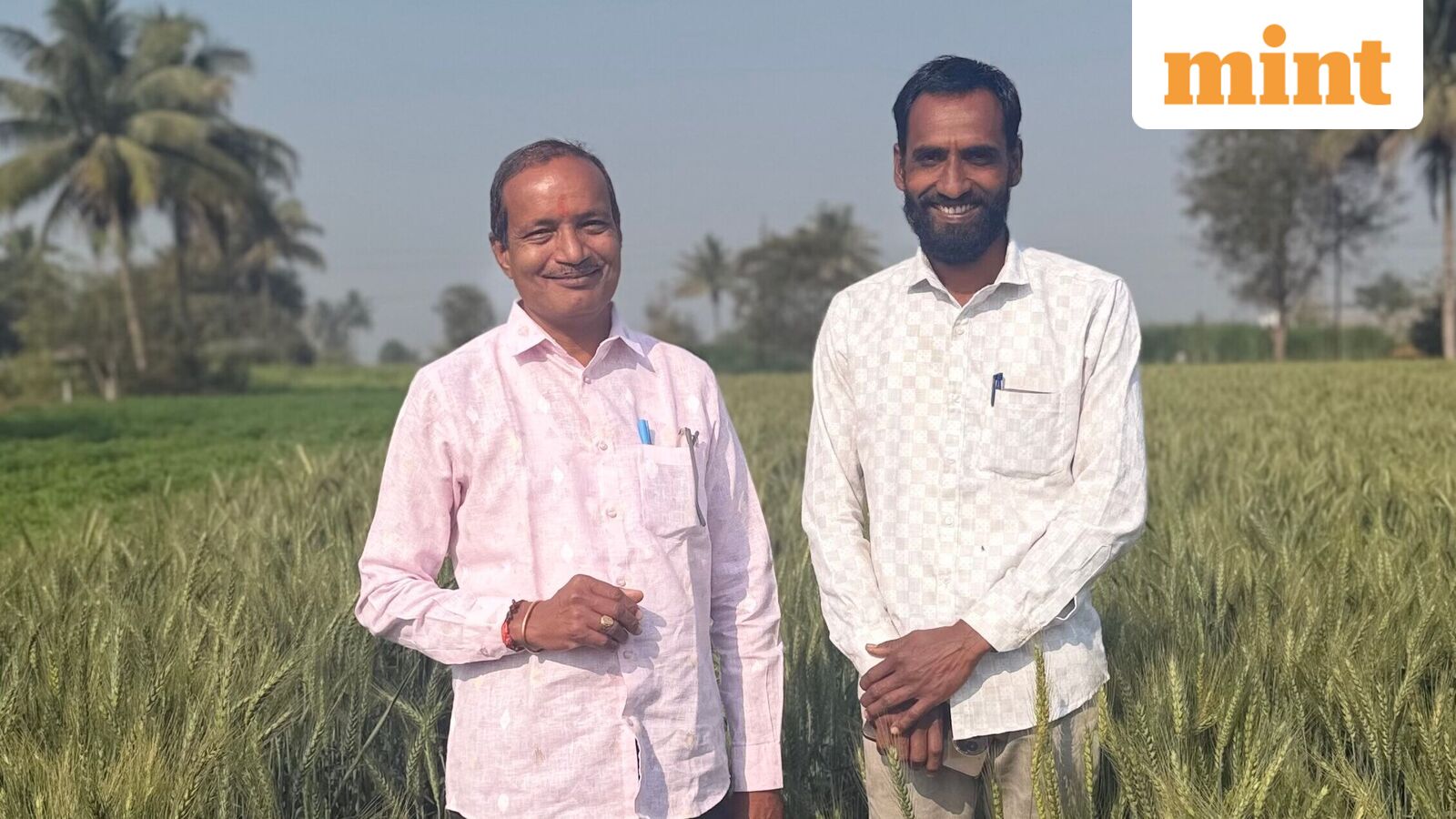
“What is happening,” he says, “is that the joint family did not live.”
He isn’t romanticising it. He’s describing a practical advantage the old arrangement had: when his grandfather’s house held 30 people, farm decisions didn’t require an appointment with an officer or a visit to a university. Somebody in the house had seen the crop up close. Somebody had tried a method last season. Advice travelled through courtyards and meals, through evenings long enough for one farmer to notice what another farmer had done.
His own day is split the way small farming days often are—across crops and animals, across work that can’t be postponed. Sugarcane is the main crop. He intercrops—chickpea, soybean, wheat. He keeps cattle. Dairy runs through the day: fodder, milk, the fixed chores that don’t wait for a convenient time to go and meet an officer or catch a scientist at a training.
The universities and research stations still exist. So do the agriculture staff. Asawa’s complaint is simpler: “When we work in our fields, we can’t coordinate with them that much.”
So farmers fall back on whoever is closest and fastest: the Krushi Seva Kendra, the local input shop that sells seed, fertiliser and pesticide, and, just as often, sells the advice that comes with it.
“Whatever they give us, we have to use it,” Asawa says.
Two months earlier, he noticed a problem in his crop—small red dots. Instead of the old routine of going to the shop, Asawa this time checked the MahaVISTAAR app, one that provides agricultural information, built by the department of agriculture, government of Maharashtra. It’s a way to get university-backed advice right away.
The app gave a mixing instruction—how much chemical to dissolve in water before you spray—“25 grams per 10 litres”. The Krushi Seva Kendra advised 50 grams per 10 litres.
He tried the lower dose. It worked. “I saved at least ₹2,000 per acre,” he says.
Asawa lingers less on the money than on the source. “This research is coming from the university,” he says. “There is full trust. And there is no marketing for this.”
What’s being tested—here, and across the state line into Gujarat—is who gets to answer first, and what a farmer can trust when they’re making a decision mid-day. If the quickest answer is the shop counter, the advice arrives with a bill. If the quickest answer is a helpline or an app backed by universities and cooperatives, the bet is that speed doesn’t have to mean salesmanship.
The source line
When officers in Sangamner talk about “university-backed,” they’re not using it as a prestige word. They mean something more literal: the app isn’t scraping answers off the open internet; it’s carrying, in phone form, the paper advisories that already exist in Maharashtra.
“The complete information in MahaVISTAAR hasn’t been put on the internet,” Akshay Mahadev Gosavi, an agriculture officer in the Sangamner subdivision, tells me. It’s pulled from research institutions—especially the agricultural universities—and entered into the system.
At the Sangamner agriculture office, the officer says a big part of the job now is simply getting farmers onto that pipeline—registration, first questions, first proof that the answer matches the field.
In the district offices, the reason for building the app is blunt. Farming is less predictable now; field staff can’t be everywhere. So the app tries to carry the “package of practices”—from sowing to marketing—into a phone: pest guidance with dosage, mandi prices, scheme access, and directories for things like equipment and storage so farmers aren’t forced into distressed sales. The database keeps getting updated as farmers keep asking questions.
In Nashik, Ravindra Mane, an officer in the district agriculture setup, described the app as one integrated place to access agricultural resources.
The build, he says, is still unfinished—“20 to 30%” done, backend work ongoing.
View Full Image
Mane kept circling back to one detail—the source line. “The information that is being sent to you, its source is also given,” he says, as if the whole app depended on that one discipline. In his telling, the chatbot isn’t magic; it’s filing. He describes the chatbot’s knowledge base as a stitched-together file of what the state already treats as authoritative: university advisories, documents from the Maharashtra animal-husbandry department, and material from the Indian Council of Agricultural Research and the Krishi Vigyan Kendras.
Farmers don’t need a bibliography, he suggests. They need to know whether an answer came from a university or a department circular—before they risk money, crops, and health on it.
Mane’s sharpest contrast was about timing. Earlier, he says, a university advisory might reach the department in a week, get typed into Krishi Samachar, and by the time it landed, “the pest had already spread.” Now, the system can push a weather-change or pest-risk notification inside 24 hours—fast enough to matter in the way Asawa’s “25 grams” mattered.
To get it onto phones, he describes the rollout like a drive: about 60 student volunteers in green T‑shirts; QR codes printed on the back so farmers could download the app on the spot; “Join our digital movement” printed on the front; and schoolchildren recruited as the district’s best messengers because, as he says with a shrug, “these children can do anything on Android.”
Out of roughly 735,000 farmers in Nashik, around 186,000 had registered and around 66,000 had completed registration as farmers. The biggest obstacle, he admits, was still connectivity: in tribal belts like Surgana, there were 27 villages with no network coverage at all, and the team was planning an offline mode that would sync once a phone reached coverage again.
The ‘AI summit’
In Nashik district, a gathering of farmers is being called an “AI summit.” Nobody arrives talking about algorithms. They arrive talking about price.
“The tomato that went for ₹50 a kilo today,” says Dattu Dhage, “sometimes will go for ₹10, sometimes ₹100.”
He lists what grows around them—tomato, brinjal, fenugreek, cauliflower, karela, rice, wheat, gram. The diversity is pride, but it’s also pressure. It means you are always making decisions across crops, across markets, across risk.

View Full Image
The MahaVISTAAR app is present in the meeting—its standard operating procedures (SOPs), its chatbot, its promise of neutral information in a landscape where private apps often lead you toward a product. But the argument in here isn’t about the idea. It’s about whether the numbers match the day.
Rajkumar, a farmer from Nashik, tells me he first learned about the app at a Gram Panchayat workshop. Shailesh Dhage, who grows tomato and soybean, says he’s used its SOPs and chatbot for questions as varied as wheat, fodder grass, and insect disease—proof, in miniature, of what farmers mean when they say they want answers fast.
Tukaram Gamne, who says he’s been watching the app, puts it in one line: “The app says that the market of soybean is still ₹45 per kg, but the actual market price is ₹53.” The app, he complains, was showing old data.
What he wants is practical: if prices are moving this fast, show me something I can act on. Where nearby can I get a better rate that’s worth the drive? Because the moment you make it about travel, fuel, and time, “information” becomes a profit-and-loss decision.
Parimal Singh is the project director of PoCRA, the state’s climate-resilience agriculture programme, formally the Nanaji Deshmukh Krishi Sanjivani Project. His answer to this isn’t “trade on the platform.” He’s cautious about the state becoming an active player in a private market. But he does want the app to become a decision-support tool: if you’re showing prices across a 30-kilometre periphery, you should show a travel or logistics-cost calculator alongside it. You should show a simple price history graph, so a farmer can see whether the number is a one-day spike or a trend. You should help buyers and sellers find each other—discovery—without pretending the government can guarantee the deal.
Singh puts the ambition in the language of someone building public infrastructure: move from “disaggregated, fractured” access to information to “a single place, validated, credible.”
In our conversation, he keeps returning to the same constraints: guardrails, consent, sources. One rule, he says, is that the system shouldn’t behave like a farmer with an open browser—if the answer isn’t inside, it can’t just “dig anywhere” on the World Wide Web.
His ambition for the app is also more granular than “one message fits all.” With consent, he wants it to know what kind of farmer you are, and eventually move toward the parcel level—so advisories can be tailored to the crop, the plot, and the person: a woman farmer who is also a dairy farmer; a krishi tai acting as an extension node; someone in a self-help group whose constraints differ from someone outside it.
He also describes a development discipline that’s easy to miss when you only see the app icon. They launched around 21 May, and from May through September focused on stabilizing—“let us weed out mistakes”—because the world of farm questions is so wide that the early job is error control, with humans in the loop. By the time we spoke, Singh says the app had around 25,00,000 downloads, and the chatbot had about 4,50,000 unique users—eight to ten thousand of them asking questions daily.
When he talks about what comes next, he stops talking about the screen and starts talking about a phone call. Telephony, he says, is already plugged in; the hard part is making it survive the “noisy world.” But he calls it the coming “game changer”: both push calls (the system calling farmers) and two-way calls (farmers calling in). The numbers he uses are program-scale: if the system can call 15 million farmers over seven days, he expects 50,00,000 to respond. That kind of response creates feedback loops—farmers correcting the system, the system learning what farmers actually ask—that don’t exist when everything depends on an office visit.
“We are working with countries and early adopter states in India (Maharashtra is one example) to create sovereign, safe, accountable AI applications for people at scale,” said Jagadish Babu, the chief operating officer of EkStep. The Bengaluru-based nonprofit has partnered with the Union agriculture ministry on Project VISTAAR, the DPI network designed to plug into AgriStack and run AI chatbots, and it supports AI4Bharat’s Indian-language speech work.
The frictions
Meanwhile, around the meeting, other frictions show up. Language changes fast here. In five kilometres, the Marathi shifts. Farmers say some Marathi dialects still isn’t fully supported—one of those quiet constraints that can kill adoption without anyone noticing.
There’s also the bureaucratic fatigue that makes farmers cynical about anything “digital” in the first place. A drip-shop owner, Anil Gangurde, talks about loan applications that still send people to cyber-cafés and Aadhaar centres. Another farmer, Mayur Jaiwantagam, talks about what’s useful: cold-storage listings, phone numbers, contact details—things that let small farmers call directly instead of begging favours.
‘Mu Sarlaben’
Leaving Maharashtra, the “app story” stayed in my head as a handful of scenes: Asawa measuring grams into 10 litres of water because his phone told him to; farmers in Nasik arguing over a soybean rate that doesn’t match the day; children who could do anything on Android, and are the app’ s ambassadors.
Across the border in Gujarat, near Anand, the product isn’t crop. It’s milk. And the unit of urgency isn’t a market day. It’s the time between an animal falling sick and help arriving.
At the milk collection centre in Mujkuva village, the work starts with cleaning. “Come on, clean it up,” one woman tells another. “Let it dry.”
The machine gets calibrated. Milk arrives in cans—poured, pooled, cooled—into a bulk cooler. A local man at the centre describes the farms that feed it: mostly small holdings, four or five animals, run by family members. When something goes wrong, it falls on the people already doing everything.
At this centre, he says, the mix is mostly buffalo milk—about 70%—with cows making up the rest.
When an animal falls sick, the old arrangement is simple and slow. You call the doctor, pay ₹150, and then wait—two hours, sometimes four—for the vet to arrive.
So when a phone is put on speaker for a pilot helpline, nobody debates whether this counts as “AI.” Someone even makes the local joke: “AI” already means something here—artificial insemination. This is a different kind of AI. The question, in the room, is narrower: can it help treat the animal before the doctor arrives?
A Gujarati voice comes on. “Mu Sarlaben, Amul AI”.
Sarlaben is an AI-powered digital assistant designed for dairy farmers.

View Full Image
The assistant begins the way a caretaker would: cow or buffalo? Then the guidance comes fast and ordinary: keep the stall dry; clear old dung and mud; for a calf the first three days of colostrum matter; start mineral mix—20 to 25 grams—and build from there.
The women standing closest to the phone introduce themselves the way livestock farmers do—by counting animals. Bhargavi, from Mujkuva, tells me her family keeps around 20 cows. Jagruti says she has 10. Neela counts one cow and five buffaloes.
Bhargavi explains what she liked about the call in the language of treatment, not technology. You ask a question, she says, and the voice tells you what medicine to use and what to do; you can get it and apply it to the animal.
For “small small” problems, they tell me, families already try what they have—home remedies, organic medicines—because calling the doctor for everything is its own burden.
“If the doctor does not come immediately,” Bhargavi says, “then we will talk to the nurse.”
When I ask how they will know if advice is wrong, the answer is unromantic: you find out after you try it. But calling the doctor again and again for small things is also a problem.
Neela tells me her first call “felt good.” She says the voice understood what she asked. They’re also blunt about what still doesn’t work. The system doesn’t yet “know” them when they speak—not their herd size, not their record. Sometimes, they say, the SMS goes to the wrong number—someone else’s phone, often a male relative’s. One woman mentions another farmer’s name appearing alongside her number, like the record has been tied to the wrong person.
Later, when Ajay Sheth, Amul’s chief technology officer, walks me through the build, he starts where cooperatives always start: with the member.
“Our journey to AI started last month when our MD met Prime Minister Modi,” he says. The instruction was to build something for milk producer members, especially women, and to do it fast. “Within four weeks we are ready to offer.”

View Full Image
He keeps returning to the same idea: Amul already had a foundation—farmer apps, cattle records, decades of circulars and protocols—but much of it stayed inside offices. The project, as he describes it, is to unlock that knowledge and make it reachable by app and by a phone call, even for feature-phone users.
Jayen Mehta, Amul’s managing director, told me he’d tested the system the way a Gujarati businessman tests anything new: by trying to break it with real voices. He describes asking someone with a thick Gujarati accent to speak, then holding his breath to see if it would catch. “I was scared,” he says.
Mehta says he’d also been “shockingly surprised” when farmers began buying and selling cattle through Amul’s app almost as soon as the option existed. And in the field he noticed another quiet shift: women who realise their accounts are linked to a male relative’s number start saying they’ll change it—put my number. Standing in Mujkuva, listening to women complain about missing SMSes, you can see exactly why that matters.
Back at the milk collection centre, the questions that will decide whether any of this lasts are still basic and non-negotiable: does the number stay stable, do messages go to the right person, does the voice hold up in real noise, does the advice still make sense the next time someone’s animal is sick and the doctor is two hours away.












-

 Blockchain3 days ago
This Week in Stablecoins: TradFi Wants Blockchain – Crypto News
-

 Technology3 days ago
Amazon Exec Predicts Commercial Quantum Computers in 2031 – Crypto News
-
 Technology1 week ago
iOS 27 Public Beta 1 released with Siri AI: How to download and eligible devices – Crypto News
-

 Blockchain1 week ago
Kraken Pro Launches API Partner Program Supporting Specialized Integrations – Crypto News
-

 Blockchain1 week ago
Dogecoin Reclaims $0.073 As Meme Traders Look For A Cleaner Rebound – Crypto News
-
Blockchain1 week ago
Dogecoin Reclaims $0.073 As Meme Traders Look For A Cleaner Rebound – Crypto News
-

 De-fi1 week ago
DTCC Starts Live Tokenized-Securities Trades With More Than Two Dozen Firms – Crypto News
-
 Technology1 week ago
Cabinet approves ₹1.9 tn push for chips, mobiles to deepen local manufacturing – Crypto News
-

 others1 week ago
Bybit Wins Excellence in Innovation and Strategic Leadership Awards at Peru Blockchain Conference 2026 – Crypto News
-
Business1 week ago
Blockchain Association Casts CLARITY Act as Crypto Crime-Fighting Bill – Crypto News
-

 Cryptocurrency1 week ago
Japan passes the crypto law traders wanted but its 20% tax could still wait until 2028 – Crypto News
-
 others7 days ago
Numerai Completes Third Strategic NMR Buyback, Bringing Total Repurchases to $3.2 Million – Crypto News
-

 Blockchain6 days ago
Kaspersky Uncovers Malware Framework Targeting Crypto Investors – Crypto News
-
Blockchain6 days ago
Kaspersky Uncovers Malware Framework Targeting Crypto Investors – Crypto News
-

 Technology1 week ago
Motorola Edge 70 Max launched in India with Snapdragon 8 Gen 5, 7,100mAh battery: Check price, specs and launch offers – Crypto News
-
Business1 week ago
BlackRock Bitcoin ETF (IBIT) Gets US SEC Approval to Increase Options Contract Limit – Crypto News
-
Business1 week ago
BlackRock Bitcoin ETF (IBIT) Gets US SEC Approval to Increase Options Contract Limit – Crypto News
-
Business1 week ago
BlackRock Bitcoin ETF (IBIT) Gets US SEC Approval to Increase Options Contract Limit – Crypto News
-

 Blockchain1 week ago
Kraken Pro Launches API Partner Program Supporting Specialized Integrations – Crypto News
-

 Cryptocurrency1 week ago
Bitcoin miner CleanSpark signed a $6.6B AI lease before securing the $2.1B required to build it – Crypto News
-
others1 week ago
$10T Morgan Stanley’s E*TRADE Completes Rollout of Spot Bitcoin, Ethereum, Solana Trading – Crypto News
-

 Blockchain1 week ago
Cardano Tests Support As ADA Traders Look For A Better Catalyst – Crypto News
-

 Blockchain1 week ago
Cardano Tests Support As ADA Traders Look For A Better Catalyst – Crypto News
-

 Blockchain1 week ago
Cardano Tests Support As ADA Traders Look For A Better Catalyst – Crypto News
-
Technology1 week ago
Anthropic IPO: Meta Platforms Eyes $10 Bln Deal With Anthropic As AI Race Heats Up – Crypto News
-
Technology7 days ago
Best Leveraged Prediction Market Platforms for Event Traders – Crypto News
-
others7 days ago
Numerai Completes Third Strategic NMR Buyback, Bringing Total Repurchases to $3.2 Million – Crypto News
-

 Blockchain3 days ago
Brazilian Securities Watchdog Takes Closer Look at Tokenization – Crypto News
-
Blockchain3 days ago
Brazilian Securities Watchdog Takes Closer Look at Tokenization – Crypto News
-

 Technology2 days ago
Tech Layoffs Hit 2-Year High as Companies Embrace AI – Crypto News
-

 others1 week ago
Three Russians Accused of Facilitating $62,000,000 Cybercrime Scheme That Targeted Americans – Crypto News
-
Business1 week ago
U.S.-Iran War Update: Iran Denies Plans for Peace Talks Despite Trump’s Claims – Crypto News
-
Technology1 week ago
U.S.-Iran War Update: Iran Denies Plans for Peace Talks Despite Trump’s Claims – Crypto News
-
Technology1 week ago
U.S.-Iran War Update: Iran Denies Plans for Peace Talks Despite Trump’s Claims – Crypto News
-
Business1 week ago
Robinhood Chain’s $INDEX 150% Rally Turns Trading Fees Into Real Stock Rewards – Crypto News
-

 Cryptocurrency1 week ago
Bitcoin miner CleanSpark signed a $6.6B AI lease before securing the $2.1B required to build it – Crypto News
-

 others1 week ago
Bybit Wins Excellence in Innovation and Strategic Leadership Awards at Peru Blockchain Conference 2026 – Crypto News
-

 Technology1 week ago
Vivo T5 Lite 44W 5G in India with 120Hz display, 6,500mAh battery: Check price and specs – Crypto News
-

 others1 week ago
62,150 Americans Warned After ‘Unauthorized Party’ Breaches Healthcare Firm in Houston – Personal and Health Records Potentially Exposed – Crypto News
-

 Cryptocurrency7 days ago
XRP’s Price Health Is on the Line, Did Shiba Inu (SHIB) Finally Bottom? Ethereum’s (ETH) Mini-Golden Cross: Crypto Market Review – Crypto News
-

 Technology7 days ago
Microsoft trains sales team to talk down OpenAI, Anthropic AI models, pitches itself as ‘full AI platform’: Report – Crypto News
-
others7 days ago
US-Iran Update: Oil Prices Surge By 4% as Iran Escalates Fresh Attacks on Gulf Allies – Crypto News
-

 De-fi6 days ago
‘Coinbase Man’ Token Crashes as Armstrong Swaps His Avatar for a CryptoPunk – Crypto News
-

 Blockchain6 days ago
Uniswap Founder Proposes v4 Protocol Fees Across Multiple Networks – Crypto News
-

 Technology5 days ago
Instagram, Facebook down? Thousands of users report mass outage; netizens say ‘no posts coming up on feed after refresh’ – Crypto News
-
others1 week ago
XRP Price & Open Interest Jump as Whales Scoop 70M Coins in a Week – Crypto News
-

 Blockchain1 week ago
Trump Aide Faces Scrutiny Over $100K in Kalshi Speech Bets: ABC – Crypto News
-

 Blockchain7 days ago
Chainlink Holds Support As CCIP Adoption Becomes A Longer-Term Test – Crypto News
-
Blockchain7 days ago
Chainlink Holds Support As CCIP Adoption Becomes A Longer-Term Test – Crypto News
-
Cryptocurrency7 days ago
XRP’s Price Health Is on the Line, Did Shiba Inu (SHIB) Finally Bottom? Ethereum’s (ETH) Mini-Golden Cross: Crypto Market Review – Crypto News