De-fi
SEC makes huge U-turn, declares crypto tokens are ‘digital commodities’ after years of legal battles – Crypto News

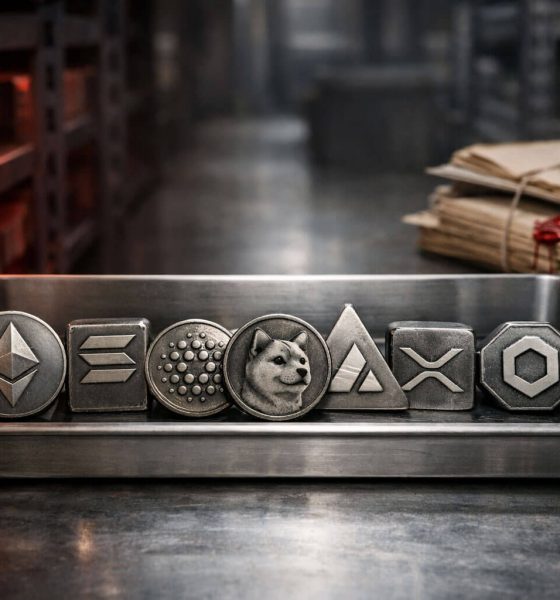
The SEC just made its biggest crypto classification move in years, placing major tokens such as Ethereum, Solana, Cardano, Dogecoin, Avalanche, XRP, and Chainlink into a “digital commodities” bucket while saying some token sales can stop being treated as securities-law cases once the issuer’s core promises are fulfilled.
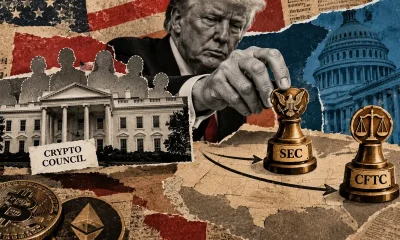
Paired with a new SEC-CFTC coordination framework, the March 17 interpretation is less a narrow staking memo than a broad attempt to replace years of crypto-by-enforcement with a clearer split between assets, contracts, and regulator turf.
Until Gary Gensler left the SEC, crypto in the US has lived under a legal cloud. Tokens were launched, traded, staked, wrapped, and airdropped while builders and users were left guessing about the boundary between securities law and commodity law.
The long-awaited interpretation explaining how federal securities laws apply to certain crypto assets and common crypto transactions, and the CFTC joined it, saying it will administer the Commodity Exchange Act consistently with that view.

The Mar. 17 release provides interpretive guidance while preserving existing fraud liability and registration requirements. Additionally, it draws clearer lines.
The SEC’s fact sheet says the agency had spent more than a decade engaging with crypto, mostly through Howey-based analysis, and, before 2025, failed to build a tailored framework, instead “regulating by enforcement.”
The Mar. 11 SEC-CFTC memorandum of understanding then established a Joint Harmonization Initiative to clarify product definitions, reduce friction for dually registered venues and intermediaries, and coordinate policymaking, exams, and enforcement.
In the MOU itself, the agencies also commit to consult on overlapping enforcement matters, including, where appropriate, before a Wells notice or similar step.
That makes this week’s interpretation bigger than staking or airdrops.
In plain English, the SEC is now saying that many major crypto tokens are not themselves securities.
It then goes further to confirm that some ordinary crypto activities, such as covered staking, mining, wrapping, and certain airdrops, can fall outside securities-sale treatment in some circumstances, and that a token sale does not necessarily remain a live securities-law relationship forever if the issuer’s essential promises have been fulfilled.
That does not erase fraud liability, excuse unlawful original sales, or settle every edge case, but it does give exchanges, issuers, builders, and users a much clearer answer to the question that has hung over the market for years: what is the asset, what is the contract around it, and when does that contract end?

A federal labeling system
The government is finally saying, in plainer terms, what people are buying: a commodity-like token, a collectible, a practical tool, a payment stablecoin, or a tokenized security.
The SEC fact sheet states that digital commodities, digital collectibles, digital tools, and GENIUS Act payment stablecoins fall outside securities classification, whereas tokenized securities remain securities.
That means that a stablecoin such as USDC falls outside the securities classification, while the tokenized stocks xStocks issued by Kraken and Backed Finance would be classified as securities.
It also says covered protocol mining, covered protocol staking, and wrapping of a non-security crypto asset fall outside the offer-and-sale requirement, and that certain airdrops fail Howey’s investment-of-money prong.
It also reduces one of crypto’s biggest structural drags in the US: uncertainty over ordinary token activity being considered an illegal securities transaction after its conclusion.
The interpretation says that added clarity could reduce legal costs, increase competition, and encourage more activity to remain in the US.
| Category | SEC/CFTC treatment in the release | What it means in plain English |
|---|---|---|
| Digital commodities | Not themselves securities | Commodity-like tokens do not start inside securities law |
| Digital collectibles | Not themselves securities | Collectible-style assets are outside the securities bucket |
| Digital tools | Not themselves securities | Utility-like tokens are not automatically securities |
| GENIUS Act payment stablecoins | Not themselves securities | Some payment stablecoins begin outside securities status |
| Tokenized securities | Remain securities | Tokenized stocks, bonds, and similar assets stay inside securities law |
| Covered mining | Not an offer/sale of securities in described cases | Core protocol participation may sit outside securities treatment |
| Covered staking | Not an offer/sale of securities in described cases | Some staking activity is clearer for users |
| Wrapping non-security assets | Not an offer/sale of securities in described cases | Technical asset transformations are not automatically securities transactions |
| Certain airdrops | Fail Howey’s investment-of-money prong | Some free token distributions may fall outside securities law |
The separation concept
The most important shift may be conceptual. The SEC says a non-security crypto asset can be sold subject to an investment contract and later, separate from that contract, once the issuer’s essential promises are fulfilled, or, in some cases, if those promises clearly fail.
In plain English: a token can exit securities status when the underlying investment contract ends.
That directly addresses the long-running fear that tokens are permanently stained by the way they were first sold. The release explains that when buyers cease to reasonably expect the issuer’s essential managerial efforts to remain connected to the asset, the token can separate and exit that contractual relationship.
Separation still requires that the original token sale was registered or exempt when the investment contract was created, and fraud liability can survive even after the token later separates.
The release also says the common-enterprise element of Howey must be satisfied, and it explains that if the issuer’s promises remain connected to a token, secondary market trades in that token can still be securities transactions until separation occurs.
The agencies are saying the answer depends on whether the underlying issuer-driven investment contract is still alive.
That is a much more structured framework than the old blanket fog.
| Question | If yes | If no |
|---|---|---|
| Is the asset itself a tokenized security? | Securities law applies | Go to next question |
| Was it sold with an investment contract? | Go to next question | Asset begins outside securities status |
| Are issuer promises still central? | Securities obligations may continue | Separation becomes possible |
| Was the original sale registered or exempt? | Separation may occur if contract ends | Liability can survive |
What changed for ordinary users
For users, the practical shift is that the SEC has defined core behaviors more precisely.
Covered protocol mining, protocol staking, and wrapping are outside securities-sale treatment in the circumstances described, and certain no-consideration airdrops fail Howey’s investment-of-money prong.
The government has said that some ordinary crypto activities may fall outside the securities bucket in the described circumstances, while other configurations may still trigger securities obligations.
For platforms, the new rulebook reduces the category problem.
Digital commodities, collectibles, tools, and permitted payment stablecoins begin with the assumption that securities laws apply to the contractual relationships surrounding them, if any, rather than to the assets themselves. Tokenized stocks, bonds, and similar instruments remain subject to securities law.
Non-security tokens still tied to issuer promises carry securities obligations until separation.
The release provides exchanges and wallet providers with clearer listing and feature logic while Congress continues work on the permanent statute.
The bull case holds that this will serve as the interim US operating manual. Exchanges, wallets, and issuers use the taxonomy and separation framework to lower legal friction, while the SEC and CFTC use the MOU to reduce overlap in exams and enforcement.
Congress codifies most of the framework, the agencies jointly formalize more definitions, and onshore token issuance, staking, and secondary trading expand because firms can finally structure products around clearer lines.
The SEC’s own economic section points to better pricing efficiency, more capital formation, and more competition if clarity holds.
The bear case holds that the interpretation proves helpful within a narrower scope. Litigation tests the boundaries of “separation,” later commissions revisit parts of the framework, and firms still avoid aggressive launches because past failures to register and anti-fraud exposure remain enforceable.
In this scenario, legal uncertainty diminishes but persists in edge cases.
The next phase
The SEC says the Crypto Task Force has already received more than 300 written submissions and held multiple roundtables, including a Mar. 21, 2025, session specifically on security status.
On Jan. 29, CFTC Chairman Michael Selig publicly called for clear, unambiguous safe harbors for software developers, onshoring of perpetuals, and a harmonized crypto taxonomy with the SEC.
Taken together with the Mar. 11 MOU and the Mar. 17 interpretation, the move appears to be a sequenced regulatory project.
This also puts the US closer to other major jurisdictions. The EU says MiCA is a comprehensive legislative framework covering crypto-assets and related services. The UK FCA is rolling out a staged crypto regime, with its roadmap pointing to final rules in 2026 and the new regime expected to come into force in October 2027.
The US is taking an interpretation-heavy approach, grounded in existing securities and commodity statutes. At the same time, this release moves it closer to the category-based regulatory style that other major jurisdictions are already adopting.
The real significance of this release is that the two main US market regulators are trying to move crypto from a regime of case-by-case enforcement toward a more coherent market structure.
The interpretation is paired with the Mar. 11 SEC-CFTC memorandum of understanding aimed at harmonizing oversight, and both agencies framed this week’s action as a bridge to broader market structure legislation in Congress.
Once assets are sorted into buckets and the agencies coordinate on overlaps, the next big battles shift to exchange registration, custody, tokenized securities plumbing, stablecoin competition, and the extent to which Congress codifies this framework.
The press release itself says the interpretation complements congressional efforts.
The agencies published a category-based taxonomy, explicitly addressed when non-security tokens become subject to an investment contract and when they stop being subject to one, and clarified several common crypto activities that had lived in gray areas.
That represents a materially more structured approach to enforcement.
If market participants can better predict which rules apply to which assets and activities, compliance costs should fall, pricing distortions from uncertainty should ease, and more activity can plausibly stay onshore.
Whether this becomes a true turning point, however, will depend on whether courts accept the framework, future SEC leaders keep it in place, and Congress locks it into statute.