
Cryptocurrency
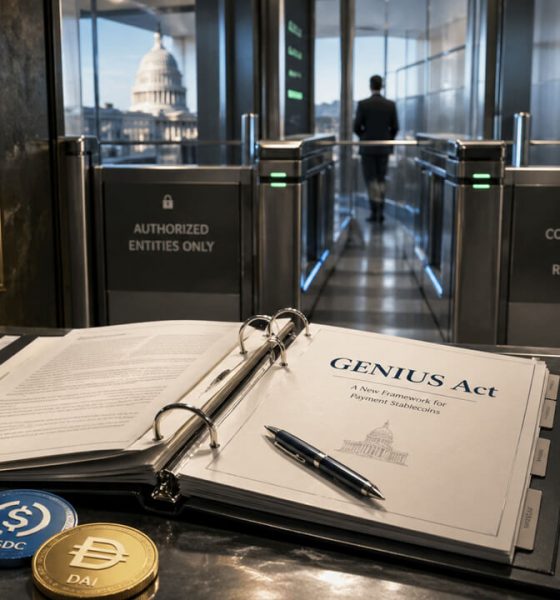
The GENIUS Act opened the door for stablecoins, but regulators want to narrow it – Crypto News



Stablecoin issuers spent years asking Washington for clear rules, and now those rules are becoming the industry’s biggest barrier to entry.
The GENIUS Act gave dollar-backed tokens something crypto had wanted since stablecoins became a serious part of the market: a legal home in the US. It defined payment stablecoins, set reserve expectations, created a federal framework for issuers, and moved the sector out of the gray zone that shaped much of its early growth.
That was an undisputed victory for an industry used to enforcement risk, state-by-state licensing, offshore structures, and years of policy drift. But once the law moved from Congress to the agencies, the hard part began.
Treasury, the Office of the Comptroller of the Currency (OCC), and the Federal Deposit Insurance Corporation (FDIC) are now turning GENIUS into an operating manual. That manual will decide whether stablecoin issuance stays close to its crypto roots or becomes a financial-infrastructure business run by firms with the compliance staff, legal budget, banking relationships, and supervisory experience to survive inside a federal rulebook.
CryptoSlate has already covered the bank-lobby push for a 60-day pause, the fight over stablecoin rewards, and the broader consequences of Congress making digital dollars easier to use. The latest GENIUS scoop now is how its implementation could make bank-grade infrastructure the price of admission.
Washington will turn digital dollars into a supervised business
Treasury’s role sits closest to the part of crypto Washington worries about most: illicit finance. Its proposed rule focuses on anti-money laundering programs, sanctions compliance, counter-terror financing, and Bank Secrecy Act obligations. Treasury said its April proposal is designed to implement the GENIUS Act’s AML and sanctions program requirements while creating a tailored regime for payment stablecoins.
A serious issuer will need customer-risk systems, sanctions screening, suspicious activity monitoring, reporting procedures, trained staff, vendor controls, audit trails, and board-level accountability. The token may still move on a blockchain, but the company behind it will look like a regulated financial institution.
The OCC is building the federal lane for issuers under its jurisdiction. Its proposal covers permitted payment stablecoin issuers, foreign payment stablecoin issuers, and certain custody activities at OCC-supervised entities. That makes the OCC central for crypto firms thinking about national trust charters, custody authority, and the status that comes with federal supervision.
The FDIC is working on the bank side of the map. Its April proposal covers FDIC-supervised permitted payment stablecoin issuers and insured depository institutions, including reserves, redemption, capital, liquidity, custody, and risk management. The FDIC also said the GENIUS Act will take effect on Jan. 18, 2027, or 120 days after final implementing rules are issued, if that date comes earlier.
Together, the proposals move stablecoin issuance away from a token launch model and toward a supervised payments business. The biggest question becomes whether an issuer can manage reserves, redemptions, custody, reporting, compliance, governance, vendor risk, and regulator relations at scale.
That’s where the advantage starts to narrow.
Large banks already have examination histories, treasury operations, risk committees, custody teams, compliance departments, and direct regulatory channels. Large fintech companies have spent years building systems around payments, onboarding, fraud controls, consumer accounts, and money movement. Regulated crypto giants such as Coinbase, Circle, and Paxos operate closer to that world than most token issuers because they already deal with institutional customers, custody expectations, and financial-market oversight.
Smaller issuers face a harsher equation because compliance doesn’t scale down neatly.
A sanctions-screening system costs money whether an issuer has $200 million or $20 billion outstanding. So do legal review, audit support, reporting infrastructure, reserve administration, redemption operations, cyber controls, and executive accountability.
Once those costs become baseline requirements, the advantage moves away from teams that can launch quickly and toward firms that can absorb a fixed-cost regulatory burden.
Compliance is the stablecoin moat
The GENIUS Act may give stablecoins a federal framework, but it’s the implementation rules that decide what kind of issuer can operate inside it. That distinction is where the market could bend toward banks, large fintechs, trust companies, and crypto firms with bank-grade systems already in place.
The new stablecoin moat may be compliance capacity.
That moat doesn’t look like the old crypto version of defensibility, like better smart contracts, faster settlements, deeper liquidity pools, or a more aggressive exchange listing strategy. It’s now a reserve committee, redemption processes that work under stress, compliance teams, and a board that signs off on risk policies.
It’s also why the implementation phase could reshape the business more than the statute itself. A company issuing a regulated dollar token will need to prove that it can manage cash-equivalent reserves, process redemptions, screen activity, report suspicious behavior, document controls, and protect customer assets. Those are ordinary expectations in supervised finance, but they’re very expensive and hard to implement when applied to a crypto product built for instant, global circulation.
The contradiction is that stricter rules can make stablecoins more useful while making the issuer base smaller.
Clear federal standards could make digital dollars easier to trust. A retailer accepting stablecoins for settlement doesn’t want to study an issuer’s reserve quality every morning. A corporate treasurer doesn’t want to explain to a board why operating cash sits in a token with unclear redemption rights. A payment company needs to know that the asset moving across its rails can survive more than a bull-market week.
Clear reserve, redemption, custody, and reporting standards solve part of that problem. They turn stablecoins into instruments that essentially look and act like bank deposits, money-market funds, card networks, and treasury operations.
That same process will bring stablecoins closer to banks. The issuer that wins under this model will have conservative reserves, formal redemption rights, audited processes, regulator-facing staff, custody arrangements, and distribution through trusted financial channels. The stablecoin will still settle across digital rails in seconds, but the issuer will behave like a supervised financial company.
So GENIUS may make stablecoins safer by effectively making them less crypto-native.
But banks are still fighting the market they help build. Their push against reward structures and their campaign around implementation show that they still see stablecoins as a threat to deposits, especially if tokens or third-party platforms give users a more visible share of Treasury-bill income. The stablecoin rewards fight could push banks toward their own branded digital dollars if crypto platforms retain a rewards lane.
The fight also shows how far stablecoins have entered into banking territory. If digital dollars stay inside offshore exchanges, banks can treat them as a crypto product. But if they become payment instruments used by merchants, fintech apps, corporate treasury desks, and settlement networks, banks have every reason to shape the rules, custody the assets, partner with issuers, or launch products of their own.
The market splits into crypto stablecoins and bank-grade stablecoins
The end result may be a split market.
Some stablecoins will continue to dominate crypto trading, offshore liquidity, decentralized finance, and venues where users care most about depth, speed, availability, and exchange access. Tether and USDT have long held that role across global crypto markets, while Circle and USDC have leaned harder into regulated distribution, institutional use, and US market access. USDC has been gaining in transfer activity even as Tether holds the larger supply base.
Another group of stablecoins may become the regulated dollars used by banks, merchants, payment companies, and corporate treasurers. This category is about institutional trust, legal certainty, and operational comfort. It’s the version of the market that Visa, Stripe, Mastercard, Bridge, and other payments firms are circling as stablecoins move from crypto trading collateral into settlement infrastructure.
Major payments companies have already begun rebuilding around stablecoin rails as regulatory clarity improves, with enterprise adoption tied closely to compliance, custody, and reserve management. That’s the same direction GENIUS implementation points toward: stablecoins as regulated money movement, rather than crypto’s internal dollar substitute.
The FDIC’s proposal also sharpens the line between stablecoins and bank deposits. The agency said deposits held as stablecoin reserves would lack pass-through deposit insurance for stablecoin holders, while tokenized deposits can remain within the existing legal treatment for deposits when structured that way. That distinction gives banks a reason to promote tokenized deposits inside their own systems, while nonbank stablecoin issuers compete on openness, distribution, and settlement reach.
This is an important difference for users. The stablecoin used to trade on an offshore venue may differ from the stablecoin a merchant accepts, a payroll provider settles with, or a corporate treasury team approves. While one market values liquidity and reach, the other values redemption certainty, reserve discipline, and supervisory comfort.
That’s the real implementation fight we’re about to witness. The GENIUS Act gave stablecoins a legal home in the US, and the agencies are now deciding what kind of residents can afford the rent.
The next signals will come from the final rules. Watch whether agencies soften or harden compliance timelines, whether banks launch stablecoin products or expand custody partnerships, whether crypto issuers seek trust charters or bank charters, and whether reserve and redemption rules become the main trust signal for corporate users. The most telling detail may be whether smaller issuers can absorb the fixed costs without selling, partnering, or retreating into narrower markets.
The GENIUS Act opened the door for stablecoins. The rulebook will decide whether the market behind that door becomes crypto’s next open frontier or a regulated payments layer built around firms that already know how banks are supervised.