


Metaverse
Vinod Khosla predicts AI will kill Indian IT sector in five years – Crypto News

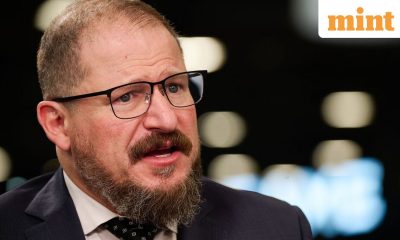
Khosla, who cofounded Sun Microsystems and invented Java —once the world’s most used programming language—also pitched for India to build an “Aadhaar-like AI stack of public utilities,” stating that creating AI as a public-sector utility will help “truly democratize” the technology’s capabilities.
“I’m proposing that every Indian can get a free doctor 24×7 because of AI, which can then be triaged selectively to human doctors depending on cases,” he said. “Every Indian child can get a personal AI tutor in their language in their region, localized to their needs, interests and culture, in any corner of this country.”
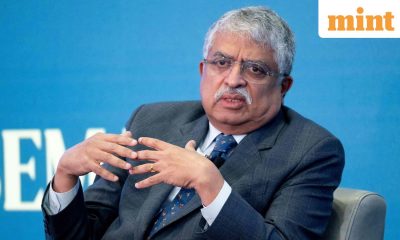
Khosla’s remarks contrast with the views of Nandan Nilekani, co-founder and chairman of India’s second-largest software services provider, Infosys Ltd, the kind of companies the venture capitalist predicted could face the axe from AI. Nilekani is also the architect of Aadhaar.
“My view is that there is no opportunity gap. Opportunity is bigger than before,” Nilekani said about AI models accelerating software automation and putting tech services firms at risk. Investors rejoiced in Nilekani’s confidence, with Infosys shares rising 4.5% through the day.
Yet, Khosla’s warnings will ring in the ears of stakeholders in India’s technology industry, which has had $45 billion in market value wiped out since the start of the year amid fears of AI disruption.
“Technology services that are outsourced by Western companies, such as IT services and business process outsourcing, will essentially be eliminated over the next five years—before 2030. They will decline rapidly and will not be profitable, even if they may not completely disappear,” Khosla said. “There may be a few very specialized areas in these sectors where they may survive. But, India should be planning a transition out of those services because none of those companies can survive if they don’t do something very different.”
The 71-year-old, who was Sun Microsystems’s first chief executive, is among the world’s top tech investors. His firm Khosla Ventures has backed hyperlocal services firm Doordash, online grocery service Instacart, software platform Nutanix, fintech firm Stripe, and Indian AI startup Sarvam, among others.
It wasn’t Khosla alone to sound the warning bells for India’s tech sector. On Tuesday, Union IT minister Ashwini Vaishnaw also said that the sector must “go whole-hog on reskilling and upskilling the workforce.”
“The IT industry is one of the biggest strengths that India has, and whenever any technology transition happens, this transition has to be managed combinely and jointly by the industry, academia and government,” the minister added.
According to Khosla, low-string software engineers may go obsolete without upskilling as there is “nothing an IT services engineer can do that an AI can’t do today, and AI can do it much better.”
The top investor, who arrived on Tuesday to participate in the India AI Impact Summit, will be a key speaker at the event alongside Alphabet’s Sundar Pichai and OpenAI’s Sam Altman.
Govt policy to be ‘key differentiator’
Reiterating his focus on an Aadhaar-like stack for AI, Khosla added, “Every farmer can get their own PhD agronomists, and all of these would come for near-free because it’s only the cost of computing that will have to be accounted for, which isn’t very much. These basic utilities should become part of India’s Aadhaar services, such as UPI, to create a full stack including UPI, primary care, education and agronomy.”
“Achieving prosperity in all of this is possible at the highest level of expertise and expenditure, and there are no other ways of implementing it in a country like India. We can talk all we want about everything that should be done, but it won’t be done—because there just isn’t enough money to do it. What I’m talking about can be done with very little money—at only a small fraction of today’s budgets in healthcare, education, or economy.”
The innovator, however, said that government policy “will be the key differentiator and play a major role in how AI will progress” in the near future.
However, he highlighted that there were no clear reasons for India not to have its own Silicon Valley-like ecosystem of foundational technology corporations, which has seen executives like himself, among many others, flourish.
“The key to creating a sector is not to design it. My personal view is if you let creativity happen among the people. India has the talent right—30-40% of the startups in the US, in Silicon Valley, have Indian founders. That is a very large percentage. They can do the same work here, because India and Indians have talent,” said Khosla.
“They have the education and the expertise, and we just have to encourage them and build some roadmaps,” he said. “You know, once Flipkart was successful, then five others wanted to start a Flipkart or something else. So, role models play a large role in creating this.”














-

 Blockchain5 days ago
The Market Starts to Splinter – Crypto News
-

 Technology1 week ago
Deutsche Bank Warns Software Debt Faces AI Threat – Crypto News
-
 Metaverse1 week ago
How to hedge a bubble, AI edition – Crypto News
-

 others1 week ago
Market focus returns to rate path – MUFG – Crypto News
-

 Cryptocurrency1 week ago
Bitcoin price outlook: buy signals appear amid deep BTC correction – Crypto News
-

 De-fi1 week ago
CME Group to Launch Futures for Cardano, Chainlink, and Stellar – Crypto News
-
De-fi1 week ago
CME Group to Launch Futures for Cardano, Chainlink, and Stellar – Crypto News
-
Business1 week ago
Godex Review: No-KYC exchange for private crypto conversions – Crypto News
-

 De-fi1 week ago
Bitcoin Recovers $70,000 Levels After Multi-Billion Dollar Crash – Crypto News
-
Technology1 week ago
US Jobs Data: Bitcoin Falls to $66K as Wall Street Sees Rise in Nonfarm Payrolls – Crypto News
-

 Cryptocurrency1 week ago
Fake ‘XRP’ Issued Token Causes Confusion on XRPL – Crypto News
-

 Technology1 week ago
Battlefield 6 Season 2 drops new map, modes and major fixes: Launch date and all you need to know – Crypto News
-

 Technology1 week ago
Will X get a native AI video editor? Product head Nikita Bier responds – Crypto News
-
Metaverse1 week ago
How to hedge a bubble, AI edition – Crypto News
-

 others1 week ago
Diversifier role challenged by volatility – HSBC – Crypto News
-
Blockchain1 week ago
XRP Ledger Clears The Threshold For Institutional Settlement – Here’s How – Crypto News
-
 De-fi1 week ago
Robinhood Launches Public Testnet for Ethereum Layer 2 Blockchain – Crypto News
-

 Technology1 week ago
Chile launches open-source AI model designed for Latin America – Crypto News
-

 others1 week ago
Fraudster Who Drained $73,000,000 From Americans in Crypto Scheme Gets Two Decades in Prison – Despite Being on the Run – Crypto News
-
others7 days ago
U.S. Jobs Report: January Nonfarm Payrolls Rise To 130k, Bitcoin Climbs – Crypto News
-
 Cryptocurrency7 days ago
Strongest quarter in three years – Yet, Canaan’s CAN stays below $1! – Crypto News
-
Business7 days ago
U.S. Government Shutdown Odds Hit 84%, Will Bitcoin Crash Again? – Crypto News
-
others7 days ago
U.S. Government Shutdown Odds Hit 84%, Will Bitcoin Crash Again? – Crypto News
-

 De-fi1 week ago
Tether Invests $100 Million in US ‘Crypto Bank’ Anchorage Digital – Crypto News
-

 Cryptocurrency1 week ago
Pompliano: Bitcoin Will Do ‘Very Well’ Over Long Run – Crypto News
-
 Metaverse1 week ago
AI is sneaking up on the Fed. Will Warsh be ready? – Crypto News
-
Business7 days ago
Breaking: $14T BlackRock To Venture Into DeFi On Uniswap, UNI Token Surges 28% – Crypto News
-
others7 days ago
U.S. Government Shutdown Odds Hit 84%, Will Bitcoin Crash Again? – Crypto News
-
Business7 days ago
U.S. Government Shutdown Odds Hit 84%, Will Bitcoin Crash Again? – Crypto News
-
Business6 days ago
Why Galaxy CEO Mike Novogratz Signals End of Crypto’s Speculative Era – Crypto News
-

 others1 week ago
INVESTING YACHTS Launches RWA Yacht Charter Model – Crypto News
-

 others1 week ago
Constructive view with CNY support – MUFG – Crypto News
-

 Technology1 week ago
EU warns Meta WhatsApp policy could cause serious harm to rival AI chatbots: All you need to know – Crypto News
-
Business1 week ago
Bernstein Downplays Bitcoin Bear Market Jitters, Predicts Rally To $150k This Year – Crypto News
-
Business1 week ago
Bernstein Downplays Bitcoin Bear Market Jitters, Predicts Rally To $150k This Year – Crypto News
-
Business1 week ago
Bernstein Downplays Bitcoin Bear Market Jitters, Predicts Rally To $150k This Year – Crypto News
-

 De-fi1 week ago
Why Bitcoin Crashed Over 10% in One Week – Crypto News
-
Business1 week ago
XRP News: Ripple Expands Custody Services to Ethereum and Solana Staking – Crypto News
-
Business1 week ago
BitMine Keeps Buying Ethereum With New $84M Purchase Despite $8B Paper Losses – Crypto News
-

 Technology1 week ago
Oppo K14x with 6.75-inch 120Hz display, 6,500mAh battery launched in India: Check price, full specs, and more – Crypto News
-

 others1 week ago
Downside bias with policy drivers – MUFG – Crypto News
-
Technology1 week ago
Why is XRP Price Dropping Today? – Crypto News
-

 Business1 week ago
QVC Weighs Bankruptcy as $6.6 Billion Debt Looms – Crypto News
-

 De-fi1 week ago
Spark Launches Institutional Lending Products in Off-Chain Expansion – Crypto News
-
Business1 week ago
Ripple Price Prediction As Goldman Sachs Discloses Crypto Exposure Including XRP – Crypto News
-

 Cryptocurrency1 week ago
Argentum AI Unveils Nuno Pereira As Managing Partner, Eying Faster Global Expansion – Crypto News
-

 De-fi7 days ago
Franklin Templeton and Binance Launch Tokenized Collateral Program – Crypto News
-

 others7 days ago
BTCC Exchange Launches BTCC Earn with Flexible 20% APY and Exclusive New User Offer – Crypto News
-
Cryptocurrency7 days ago
Wall Street Giant Citi Shifts Fed Rate Cut Forecast To April After Strong U.S. Jobs Report – Crypto News
-
Cryptocurrency7 days ago
Wall Street Giant Citi Shifts Fed Rate Cut Forecast To April After Strong U.S. Jobs Report – Crypto News