

Metaverse
AI will augment, create new jobs in India: World Bank – Crypto News

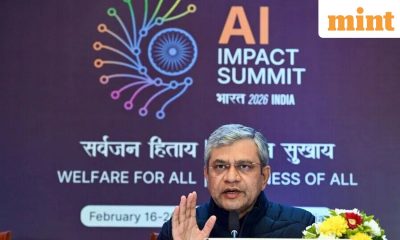
The halls of the recently concluded India AI Impact Summit in the national capital were not just filled with the usual tech enthusiasts and industry titans. They were packed with students and young innovators. This demographic energy serves as the backdrop for a critical conversation on how India is pivoting from using technology for mere “efficiency” to a new era of “capacity to serve” at a scale previously thought impossible.
In a special session of the Mint Podcast, powered by the World Bank Group, industry leaders explored the “AI jigsaw.” Hosted by Abhishek Singh, Deputy Editor, LiveMint, the discussion featured Mahesh Uttamchandani, Regional Practice Director for Digital & AI at the World Bank Group, and Krishnan Chatterjee, Head of Marketing at Google Cloud India. Together, they mapped out a future where India doesn’t just consume AI but leads its global application.
Watch the full episode below,
The end of mediocrity
The persistent shadow over the AI boom is the fear of job displacement. However, the experts offered an upside to this anxiety. Chatterjee proposed a mantra and said that AI is the ultimate filter for quality. He argued that AI is the “enemy of mediocrity”, suggesting that while those who excel in their fields will find their roles augmented, those who are merely “getting by” face a genuine threat.
Beyond the individual level, Chatterjee argued that while traditional automation focused on lowering the “cost to serve”, AI expands the actual “capacity to serve”. For a nation of 1.4 billion people, this shift is monumental. It means AI could finally bridge the structural gaps in healthcare, education and food security that have dogged India’s development for decades by providing services at a scale that human labour alone could never reach.
Uttamchandani echoed this optimism, noting that emerging markets like India might actually face lower risks of total automation than advanced economies. He pointed out that India has fewer of the routine cognitive and knowledge-based tasks that AI is currently best at replacing. Instead, the bigger opportunity lies in augmentation, by empowering teachers in remote villages or nurses in rural clinics with AI tools that allow them to perform at a much higher level of precision and reach.
Small AI and the digital public stack
While Large Language Models (LLMs) grab the headlines, the speakers emphasised that “Small AI” in the form of specialised applications can be the true game-changer for India’s grassroots. Uttamchandani highlighted how the World Bank sees AI transforming the lives of rural artisans and farmers. For instance, a female artisan from a rural area who previously could only sell her wares in the immediate village now has access to digital platforms and payment mechanisms. This transaction creates a digital data trail, building a credit history for someone who never had one before, which AI can then use to automate fair credit decisions.
India’s Digital Public Infrastructure (DPI) – comprising of Aadhaar, UPI and DigiYatra – has already become a global case study and is often referred to as the India Stack. The next phase involves layering AI on top of this planet-scale data foundation. Chatterjee noted that India is already working with partners to package this infrastructure into a “DPI in a box” for export to other countries. This data layer allows for the creation of autonomous agents that can handle complex commerce and identity tasks that remain impossible in regions without such integrated systems.
This evolution is already showing practical results across various sectors. In healthcare, for instance, AI systems are being deployed to read chest X-rays and provide diagnostic conclusions in areas lacking specialists. In agriculture, crop advisory services and yield prediction tools are putting high-level data into the hands of small-scale farmers. Even in education, platforms like Diksha are using AI to work across multiple languages and tailor learning plans for students who were previously underserved by traditional schooling.
The road ahead
Despite the excitement, the transition is not without its hurdles. The move toward Agentic AI, where AI acts autonomously as an agent, brings with it concerns of cybersecurity. Chatterjee noted that the havoc that could be wreaked if the security is not handled well is his deepest fear. As India onboards its most vulnerable citizens into financial services and onto the internet, the responsibility to protect them from online threats becomes a primary mission for both the government and the private sector.
To maintain its lead, the experts suggested that the Indian government must continue its AI Mission, focusing on the delicate balance of AI sovereignty. This involves ensuring the privacy rights of individuals are protected while allowing data to flow freely enough to power and train local models. Striking this balance across a diverse, federated system like India will be a challenge that requires deep coordination between central and state governments.
As the summit concluded, the experts offered a bold closing strategy for India’s future. They suggested that India should “share seamlessly” its successes and digital blueprints with the world, while simultaneously “stealing shamelessly” the best global ideas to deploy them at scale. In summary, India is no longer just a back-office for global tech, but the laboratory where the world’s most “impossible” development problems are being solved through the intelligent application of AI.
Note to Readers: This episode of Mint Podcast wass powered by the World Bank Group.


















-

 Metaverse1 week ago
How companies are turning AI on itself to fight fraud – Crypto News
-

 Blockchain1 week ago
Hyperunit Whale Dumps $500M In Ethereum As Massive Crypto Bet Turns Sour – Crypto News
-

 others1 week ago
Growth to moderate as BNM holds – UOB – Crypto News
-

 others7 days ago
Indian Rupee trades calmly against US Dollar ahead of US markets opening – Crypto News
-
others1 week ago
Bitget Launches Gracy AI For Market Insights Amid Crypto Platforms Push For AI Integration – Crypto News
-
Cryptocurrency1 week ago
TRUMP Coin Pumps 5% as Canary Capital Amends ETF Filing With New Details – Crypto News
-
Business1 week ago
Michael Saylor Says Strategy Can Cover Debt Even If Bitcoin Crashes to $8,000 – Crypto News
-

 Blockchain1 week ago
Extreme Bitcoin Shorts Could Predict A Bottom, Here’s The Significance – Crypto News
-
Business1 week ago
Bitcoin vs. Gold: Expert Predicts BTC’s Underperformance as Options Traders Price in $20K Gold Target – Crypto News
-

 Technology1 week ago
Developers key architect of AI; India stands at the centre: OpenUK CEO Brock – Crypto News
-

 Blockchain1 week ago
Bitcoiners Face Test As Inflation Cools: Pompliano – Crypto News
-

 others1 week ago
Budget support and equity-market push – Commerzbank – Crypto News
-
others1 week ago
XRP Price Prediction Ahead of Potential U.S. Government Shutdown Today – Crypto News
-

 others1 week ago
Solid growth outlook into 2026 – Standard Chartered – Crypto News
-
Cryptocurrency1 week ago
TRUMP Coin Pumps 5% as Canary Capital Amends ETF Filing With New Details – Crypto News
-

 Cryptocurrency1 week ago
Crypto Flows to Human Trafficking Services Jump 85% to Hundreds of Millions in 2025 – Crypto News
-
Business1 week ago
Michael Saylor Says Strategy Can Cover Debt Even If Bitcoin Crashes to $8,000 – Crypto News
-

 Metaverse1 week ago
Maharashtra’s MahaVISTAAR meets Amul’s Sarlaben – Crypto News
-
others1 week ago
Dogecoin, Shiba Inu, Pepe Coin Price Predictions As BTC Crashes Below $68k – Crypto News
-

 Blockchain7 days ago
Logan Paul Sells Controversial Pokémon card For $16.5M – Crypto News
-

 others1 week ago
Interim trade deal caps near-term INR gains – MUFG – Crypto News
-

 Cryptocurrency1 week ago
Publicly Traded Blockchain Lender Figure Confirms Customer Data Breach – Crypto News
-
Cryptocurrency1 week ago
Publicly Traded Blockchain Lender Figure Confirms Customer Data Breach – Crypto News
-

 Technology1 week ago
Future of AI is a governance question, not a technology race: Vilas Dhar of Patrick J McGovern Foundation | Interview – Crypto News
-

 Blockchain1 week ago
Figure Technology Data Breach Exposes Customer Personal Information – Crypto News
-

 Cryptocurrency1 week ago
Saylor’s Strategy (MSTR) Stock Rallies 9% Amid Bitcoin Price Rebound – Crypto News
-

 Cryptocurrency1 week ago
Could XRP slide toward $0.80 next? THESE signals hold the key – Crypto News
-
 Metaverse1 week ago
India will showcase small AI, early startups at Summit starting tomorrow – Crypto News
-

 Technology1 week ago
Decoded: AI buzzwords everyone talks about – Crypto News
-
Business1 week ago
Trump-Backed American Bitcoin Reserves Surpass 6,000 BTC, Now Worth $425.82M – Crypto News
-

 Metaverse1 week ago
Mint Primer | Why is there a hype around AI summit in India? – Crypto News
-
Business1 week ago
HOOD and COIN Stock Price Forecast as Expert Predicts Bitcoin Price Crash to $10k – Crypto News
-

 Blockchain1 week ago
Nexo Relaunches Crypto Platform in the United States – Crypto News
-

 Metaverse1 week ago
Quick commerce showcase to global audience trips on logistics issues – Crypto News
-
others1 week ago
Ethereum Price Outlook as Harvard Shifts Focus from Bitcoin to ETH ETF – Crypto News
-

 others1 week ago
Amazon Handing $309,000,000 To Customers in Settlement Over Alleged Failure To Refund Returned Items – Crypto News
-

 Blockchain1 week ago
Paradigm Challenges Bitcoin Mining Narrative Amid AI Data Center Boom – Crypto News
-
Business1 week ago
Bitcoin Shows Greater Weakness Than Post-LUNA Crash; Is a Crash Below $60K Next? – Crypto News
-

 Metaverse1 week ago
AM Group challenges tech giants with $25 billion green AI platform – Crypto News
-
Blockchain7 days ago
Logan Paul Sells Controversial Pokémon card For $16.5M – Crypto News
-
Blockchain7 days ago
Logan Paul Sells Controversial Pokémon card For $16.5M – Crypto News
-

 De-fi7 days ago
Ondo Global Markets Taps Chainlink for US Stock Price Feeds – Crypto News
-

 others7 days ago
When is the UK employment data and how could it affect GBP/USD? – Crypto News
-
Technology7 days ago
Wintermute Expands Into Tokenized Gold Trading, Forecasts $15B Market in 2026 – Crypto News
-

 others6 days ago
GBP/USD sinks nearly 100 pips as UK jobless rate hits decade high – Crypto News
-

 Technology5 days ago
Apple Set to Bring Car Keys Function to Toyota Vehicles – Crypto News
-

 Metaverse1 week ago
AI isn’t taking over IT jobs—it’s changing who gets hired – Crypto News
-

 Cryptocurrency1 week ago
Is the Bear Market Over? – Crypto News
-

 Blockchain1 week ago
Bitcoin On-Chain Data Indicates High Volatility Ahead Following Post-CPI Reaction – Crypto News
-

 others1 week ago
Hackers Hit Android and iPhone Users’ Bank Accounts, Launch Mobile Spyware Platform Triggering Total Device Takeover – Crypto News