
Metaverse
Indian enterprises all-set to take an AI leap as partners guide adoption – Crypto News

The Artificial Intelligence (AI) revolution has started rewriting the rules of business. For Indian enterprises – whether it is a fledgling start-up or an established firm – the challenge isn’t just adopting AI, but knowing how to integrate it into existing processes to gain measurable value.
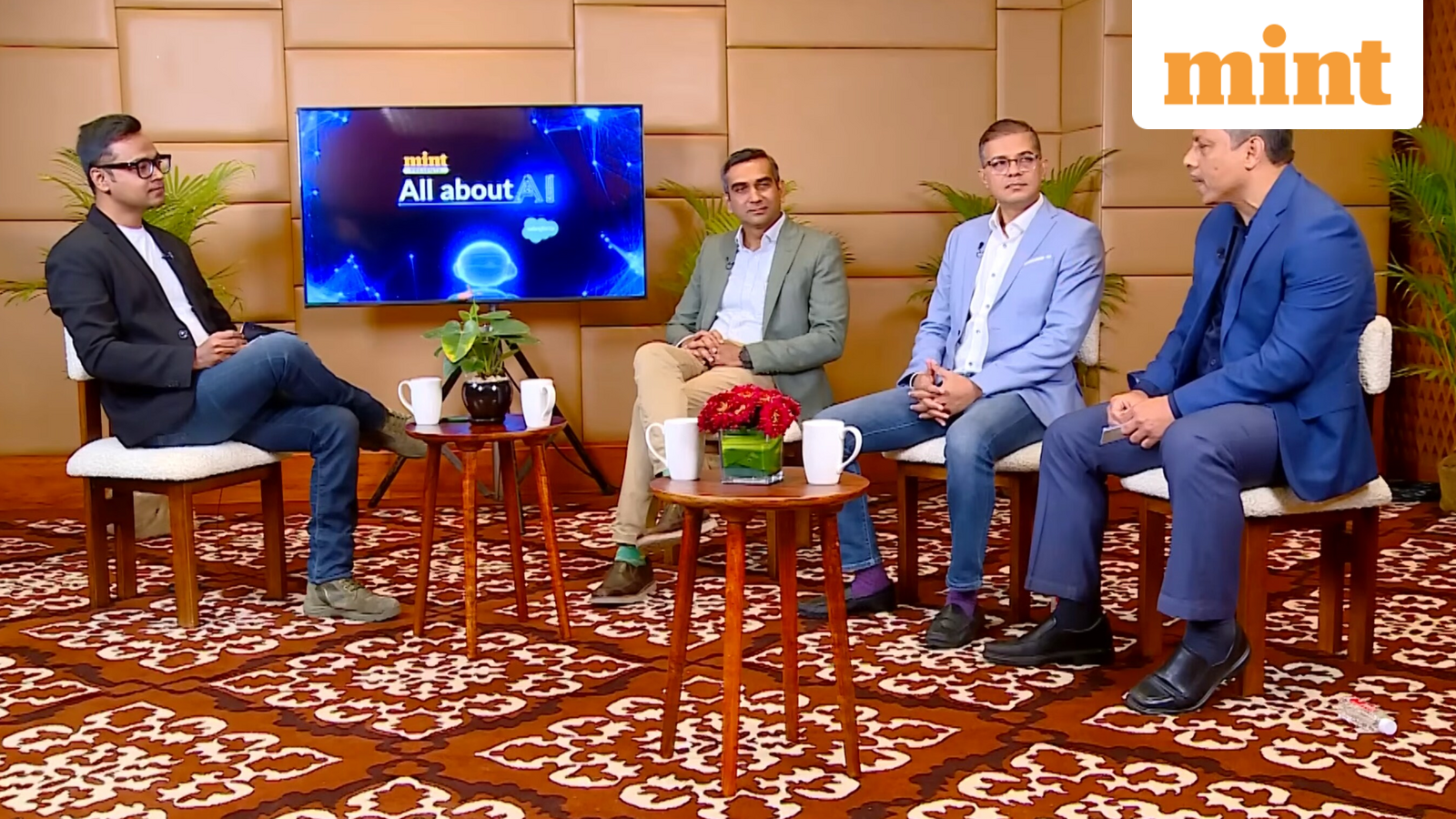
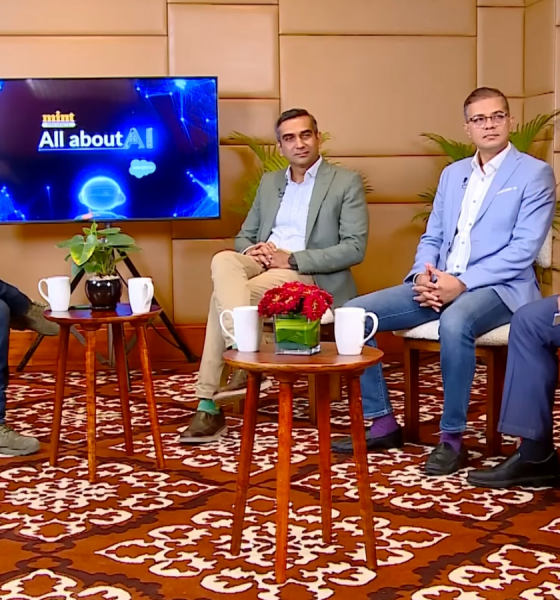
This shift was the focus of the latest episode of Mint’s All About AI series, powered by Salesforce, which brought together three leaders in the tech ecosystem – Amarendra Kumar, VP, Alliances – Partner Account Management at Salesforce India, Prashanth Kaddi, Partner – Engineering AI & Data at Deloitte, and Aditya Priyadarshan, Managing Director (Partner) at Accenture Strategy and Consulting. The consensus was clear. The speakers felt that while the AI journey is complex, with the right partners and a strategic mindset, India is positioned to progress significantly in technology adoption.
Watch the full episode below,
Mapping the Indian ecosystem
The discussion began by highlighting what contributes to India’s position in the global AI landscape in terms of scale, talent, and ambition. “India is home to around 9.8 million STEM students passing out every year. If you see our own ecosystem at Salesforce, I think outside the US, we are the biggest part of talent for Salesforce globally,” said Kumar.
This talent pool is important, as the partners – the System Integrators (SIs) and advisory firms – are the ones translating AI platforms into bespoke solutions. Kumar stressed that this ecosystem is well-structured and stable, and plays a key role in serving not just the Indian market but also fuelling global growth.
The role of the partner
Advisory firms view their role as essential orchestrators, helping clients find value in the new technology and managing the complex change process. Their intervention begins at the very start of the journey. “Our role is as an advisor to the client, helping them articulate very clearly what exactly they are solving for. A lot of times that problem articulation is a good point to start,” explained Priyadarshan. He said that the partners’ job is to take powerful platform technology and translate it into clear business outcomes tailored to the client’s context.
Kaddi echoed this perspective, stressing that no single entity can map the entire transformation journey. He said: “Increasingly, nobody can solve all problems in the world in this transformation. Everyone needs to play a role, and we look at ourselves more and more as orchestrators.” He further said that successful strategy execution requires technology at its core, making platforms like Salesforce necessary.
How urgent is the disruption
Indian enterprises are faced with a unique challenge – navigating legacy systems and entrenched mindsets. These long-standing processes that have helped organisations grow, can slow down the transformation process.
Kumar observed that for successful firms, the transition “requires not only a technology platform change, or maybe there is a lot of… the basic fabric of organisation also goes through a bit of transition.” The credibility of established firms working together makes it easier for customers to go on that journey.
For partners, the sense of urgency is clear. “I would say that among clients, there is a feeling that the period of disruption is shrinking so quickly that you better disrupt yourself before you’re disrupted by someone else,” said Kaddi. The conversation has moved from “if” a business should adopt AI to “to when and how.” Priyadarshan said that the current moment is a significant opportunity for growth.
The importance of the human element
The panellists agreed that one of the key success factors in the AI era is the human element. The speed and scope of change are putting pressure on employees, necessitating a strategic focus on mindset. “First, obviously, I think sponsorship and leadership commitment is very important… to make sure that it is communicated to the employees that they are on the same side,” said Kaddi, adding that the ability to unlearn and relearn is a necessary skill for the future.
The goal is not to eliminate jobs, but to empower employees by taking away routine tasks and letting them focus on higher-value work. The workforce must be prepared to be lifelong learners who are not affected by job losses. “There is a lot of talk everywhere… that AI is going to wipe out 20, 30, 40, 50, depending on who you talk to, the kind of jobs or workforce, I don’t think that’s really going to happen. The success will really be determined by… your talent’s ability to upskill, learn,” said Priyadarshan.
India’s unique advantage
India has taken the lead when it comes to adoption of mobile telephony and the same is expected for other technologies like AI. “I think traditionally, we have been a little behind, but that gives us the opportunity to leap from much forward than anybody else,” said Kaddi, challenging the notion of India being behind. He pointed to examples like UPI, and added: “I think the issue earlier was, perhaps, that all of these solutions were built for a different market… and tried to sort of export to India that does not work. Now you look for examples in India. Just look at number of payment transactions that UPI does. There is no other parallel.”
This quick adoption is already happening in enterprise AI. “Some of our organisation… are still grappling with the quality of data… but look at their sort of future now. I mean, they are talking about identity (AI) which is leapfrogging some three generations ahead,” said Kumar.
Priyadarshan provided four actions for businesses to capitalise on this opportunity: First, Lead with Value by focusing on a clear business case and measurable returns. Second, Rewire the Organisation by reimagining core processes like manufacturing or sales, with AI as an integral part of the design. Third, Adopt Agentic AI by developing capabilities for AI systems that can execute autonomous actions. Fourth, Get Data Ready, as without the right data backbone, AI adoption will remain difficult.
Defining the AI era
The session concluded with the panelists offering single words or short phrases to define AI’s impact and potential. Kaddi spoke about the idea of Augmented Intelligence, and how it will enhance human creativity. Priyadarshan focused on the generational shift, calling AI Future, and adding that, “The next generation is going to have a very unique life and vantage point… but I really believe that future is going to be exciting, and a lot of it is going to be powered by AI.” Kumar highlighted the versatility and wide application of the technology, defining AI simply as Possibilities.
While the panellists agree that every industry will face change, they share an excitement that the transformation will offer Indian businesses a competitive edge on the global stage.
Note to Readers: This is a Mint editorial initiative, sponsored by Salesforce.













-

 others1 week ago
Indian Rupee trades calmly against US Dollar ahead of US markets opening – Crypto News
-

 Metaverse1 week ago
How companies are turning AI on itself to fight fraud – Crypto News
-

 Blockchain1 week ago
Hyperunit Whale Dumps $500M In Ethereum As Massive Crypto Bet Turns Sour – Crypto News
-

 others1 week ago
Growth to moderate as BNM holds – UOB – Crypto News
-
Cryptocurrency1 week ago
TRUMP Coin Pumps 5% as Canary Capital Amends ETF Filing With New Details – Crypto News
-
Business1 week ago
Michael Saylor Says Strategy Can Cover Debt Even If Bitcoin Crashes to $8,000 – Crypto News
-

 Blockchain1 week ago
Extreme Bitcoin Shorts Could Predict A Bottom, Here’s The Significance – Crypto News
-
others1 week ago
Dogecoin, Shiba Inu, Pepe Coin Price Predictions As BTC Crashes Below $68k – Crypto News
-
Business1 week ago
Bitcoin vs. Gold: Expert Predicts BTC’s Underperformance as Options Traders Price in $20K Gold Target – Crypto News
-

 Technology1 week ago
Developers key architect of AI; India stands at the centre: OpenUK CEO Brock – Crypto News
-

 Blockchain1 week ago
Logan Paul Sells Controversial Pokémon card For $16.5M – Crypto News
-

 others1 week ago
Solid growth outlook into 2026 – Standard Chartered – Crypto News
-
Cryptocurrency1 week ago
TRUMP Coin Pumps 5% as Canary Capital Amends ETF Filing With New Details – Crypto News
-

 Cryptocurrency1 week ago
Crypto Flows to Human Trafficking Services Jump 85% to Hundreds of Millions in 2025 – Crypto News
-
Business1 week ago
Michael Saylor Says Strategy Can Cover Debt Even If Bitcoin Crashes to $8,000 – Crypto News
-

 Metaverse1 week ago
Maharashtra’s MahaVISTAAR meets Amul’s Sarlaben – Crypto News
-

 Technology5 days ago
Apple Set to Bring Car Keys Function to Toyota Vehicles – Crypto News
-

 Metaverse3 days ago
PhonePe launches AI-powered natural language search built on Microsoft Foundry – Crypto News
-
Metaverse3 days ago
PhonePe launches AI-powered natural language search built on Microsoft Foundry – Crypto News
-

 others1 day ago
Healthcare Giant Handing $1,900,000,000 To Customers After Allegedly Limiting Competition, Driving Up Insurance Costs – Crypto News
-

 Cryptocurrency1 week ago
Publicly Traded Blockchain Lender Figure Confirms Customer Data Breach – Crypto News
-
Cryptocurrency1 week ago
Publicly Traded Blockchain Lender Figure Confirms Customer Data Breach – Crypto News
-

 Technology1 week ago
Future of AI is a governance question, not a technology race: Vilas Dhar of Patrick J McGovern Foundation | Interview – Crypto News
-

 Blockchain1 week ago
Figure Technology Data Breach Exposes Customer Personal Information – Crypto News
-

 Blockchain1 week ago
Bitcoin On-Chain Data Indicates High Volatility Ahead Following Post-CPI Reaction – Crypto News
-

 Cryptocurrency1 week ago
Saylor’s Strategy (MSTR) Stock Rallies 9% Amid Bitcoin Price Rebound – Crypto News
-

 Cryptocurrency1 week ago
Could XRP slide toward $0.80 next? THESE signals hold the key – Crypto News
-
 Metaverse1 week ago
India will showcase small AI, early startups at Summit starting tomorrow – Crypto News
-

 Technology1 week ago
Decoded: AI buzzwords everyone talks about – Crypto News
-

 Blockchain1 week ago
WLFI May Have Signaled Crypto Crash Hours Before Bitcoin: Study – Crypto News
-

 others1 week ago
Fraud Ring Allegedly Drains $55,000,000 From Seniors in Nationwide ‘Gold Bar Scam’ – Why Authorities Are Raiding Jewelry Stores in Texas – Crypto News
-
Business1 week ago
Trump-Backed American Bitcoin Reserves Surpass 6,000 BTC, Now Worth $425.82M – Crypto News
-

 Metaverse1 week ago
Mint Primer | Why is there a hype around AI summit in India? – Crypto News
-
Business1 week ago
HOOD and COIN Stock Price Forecast as Expert Predicts Bitcoin Price Crash to $10k – Crypto News
-

 Blockchain1 week ago
Nexo Relaunches Crypto Platform in the United States – Crypto News
-

 Metaverse1 week ago
Quick commerce showcase to global audience trips on logistics issues – Crypto News
-
others1 week ago
Ethereum Price Outlook as Harvard Shifts Focus from Bitcoin to ETH ETF – Crypto News
-

 others1 week ago
Amazon Handing $309,000,000 To Customers in Settlement Over Alleged Failure To Refund Returned Items – Crypto News
-

 Blockchain1 week ago
Paradigm Challenges Bitcoin Mining Narrative Amid AI Data Center Boom – Crypto News
-
Business1 week ago
Bitcoin Shows Greater Weakness Than Post-LUNA Crash; Is a Crash Below $60K Next? – Crypto News
-
 Metaverse1 week ago
AM Group challenges tech giants with $25 billion green AI platform – Crypto News
-
Blockchain1 week ago
Logan Paul Sells Controversial Pokémon card For $16.5M – Crypto News
-
Blockchain1 week ago
Logan Paul Sells Controversial Pokémon card For $16.5M – Crypto News
-

 De-fi1 week ago
Ondo Global Markets Taps Chainlink for US Stock Price Feeds – Crypto News
-

 others1 week ago
When is the UK employment data and how could it affect GBP/USD? – Crypto News
-
Technology1 week ago
Wintermute Expands Into Tokenized Gold Trading, Forecasts $15B Market in 2026 – Crypto News
-

 others7 days ago
GBP/USD sinks nearly 100 pips as UK jobless rate hits decade high – Crypto News
-
Technology5 days ago
Apple Set to Bring Car Keys Function to Toyota Vehicles – Crypto News
-

 Cryptocurrency3 days ago
Cardano (ADA) flashes technical reversal signals following Coinbase integration – Crypto News
-
Cryptocurrency3 days ago
Cardano (ADA) flashes technical reversal signals following Coinbase integration – Crypto News